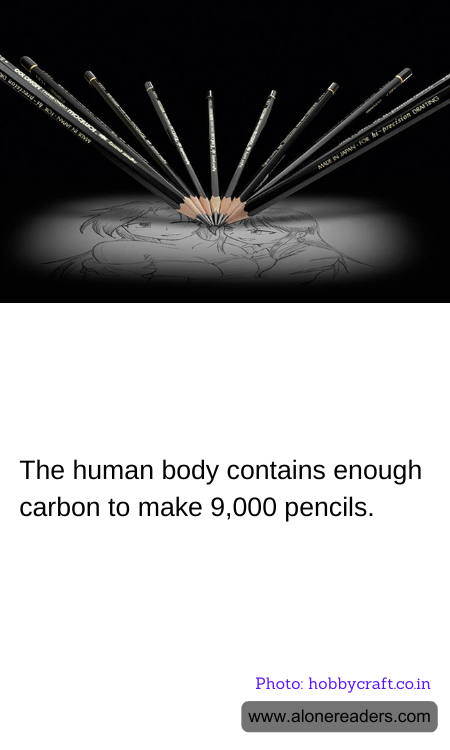
The human body is a remarkable reservoir of various elements, many of which are critical to our daily biological processes. One of the most fascinating aspects is the amount of carbon present in the human body. Carbon is a key component of all known life on Earth, representing approximately 18% of human body mass. This might sound abstract, but to put it in a more understandable perspective, the amount of carbon in the human body is enough to fill about 9,000 pencils.
This comparison highlights not just the abundance of carbon, but also its fundamental role in numerous biological structures and functions. Carbon atoms are the building blocks of most cells, tissues, and organs. They are part of DNA, carbohydrates, proteins, fats, and virtually every other component of the body's cells and structures. The element's versatile bonding properties allow it to form a wide variety of organic molecules, ranging from simple to incredibly complex structures necessary for life.
The fact that our body's carbon could be used to construct such a mass quantity of a common object like pencils provides a tangible sense of its plentifulness and its critical role. Pencils are primarily composed of graphite, a form of carbon. In a typical wooden pencil, the “lead” is actually a mixture of graphite and clay. Graphite is the component that leaves the grey or black mark on the paper. While graphite in our bodies and in pencils exists in different forms, the underlying element is the same.
Understanding the carbon content within the human body not only illuminates our biological makeup but also connects us to the larger cycles of carbon in our environment. Carbon cycles through the Earth’s ecosystems in various forms: as carbon dioxide in the atmosphere, as organic matter in soils, in aquatic ecosystems, and within the geological substrate. The carbon in our bodies is part of this grand cycle, sourced from the foods we consume, which in turn absorbed it from the environment.
Thus, the simple fact that the human body contains enough carbon to produce 9,000 pencils serves as a bridge between understanding human biology and appreciating the broader ecological and geological roles of this essential element. Our connection to the natural world is evident, not just in the foods we eat or the air we breathe, but down to the very pencils used to write, sketch, and express human thoughts and creativity.
