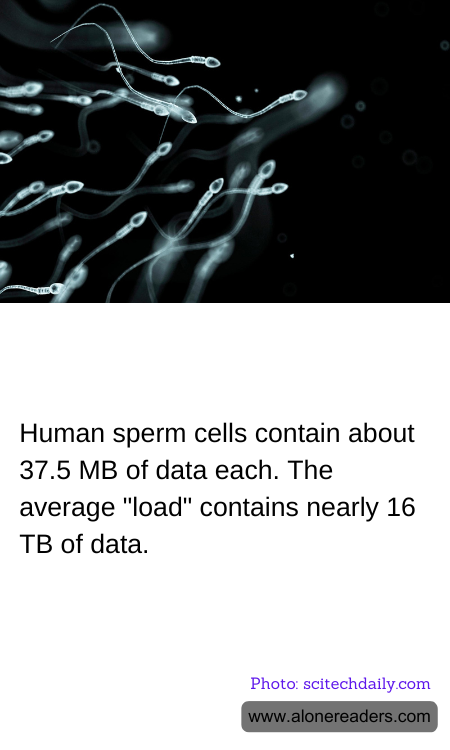
With the digital age in full swing, it’s fascinating to discover that one of the most natural elements of human life—sperm—contains a sheer abundance of data measured in terms akin to digital storage. Infographics and scientific sound bites often convey that a single human sperm cell is packed with approximately 37.5 megabytes (MB) of DNA information. To put this in perspective, one sperm cell harbors enough data to fill a small book.
Extrapolating this data to the average volume released during ejaculation, which includes millions of these sperm cells, the total data transmission is staggering. Each ejaculation transfers roughly 16 terabytes (TB) of data. This means that the total information transferred in a typical ejaculation surpasses that of massive digital libraries or comprehensive academic databases.
This comparison might seem whimsical, yet it highlights the complexity and richness of human biology. The data in each sperm cell comprise not just the genetic blueprint of human life, but also a plethora of potential genetic combinations which can result in the distinct traits of future offspring. This information is organized into chromosomes, which carry thousands of genes, and it is this organization that allows for the immense diversity seen in human life from such a compact source.
Understanding the magnitude of data contained in human sperm can also reframe our perspective on reproduction and genetics. Scientists and researchers continue to explore the implications of this data, not just in terms of volume but also in its components, functionalities, and potential for unlocking secrets to human development, genetic diseases, and evolutionary biology. The sheer amount of data packed into such a microcosmic entity emphasizes the marvel of nature's data storage capabilities compared to our man-made systems.
While the notion of equating biological processes with digital storage might be metaphorical, it provides a clear and impactful way to appreciate the intricacies of human genetics. As technology and science progress, these analogies may grow ever more crucial in educating and engaging a broader audience about the complexities of genetic science and human reproduction.
