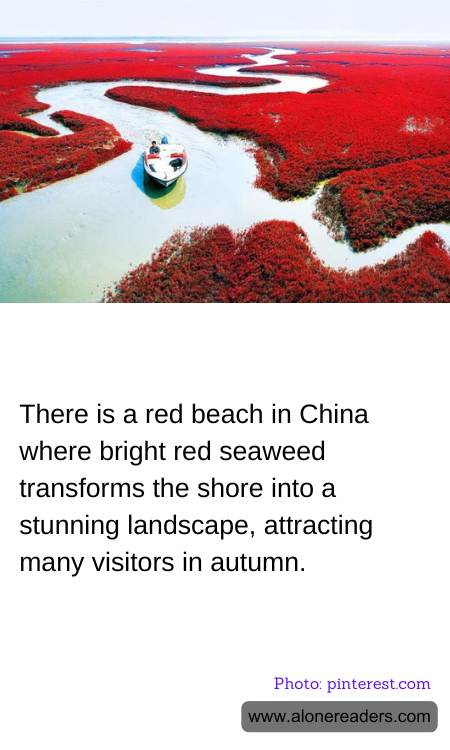
In the northeastern reaches of China, a unique natural marvel unfolds each year as autumn arrives. Known as the "Red Beach," located in the Panjin city of Liaoning Province, this splendid landscape captures the imaginations of travelers and photographers alike with its vibrant crimson hues. The striking color does not stem from the sand but rather from a type of seaweed known as Sueda. Thriving in the saline-alkali soil of the Liaohe River Delta, this seaweed begins its life cycle in a deep green hue during spring and summer, and gradually transforms to a fiery red as the temperatures drop in autumn.
This natural phenomenon occurs on one of the world’s largest wetlands, offering a critical habitat for numerous species including the endangered Red-crowned Crane and the Saunders's Gull, making it not only a spectacle of beauty but also a vital ecological zone. Each year, from September to November, the beach covers an expansive area that becomes almost entirely cloaked in red, creating a surreal landscape that seems more like a painter’s vibrant canvas than a typical seashore.
Despite its name, the Red Beach is not a typical beach where one might lay out a towel and soak up the sun. The area is predominantly marshland, making it more suitable for sightseeing than beach activities typical of sandy shores. Boardwalks and designated viewing areas have been established to protect the fragile ecosystem while allowing visitors to immerse themselves in the breathtaking scenery.
The Red Beach has gained international fame, drawing tourists not only from other parts of China but also from across the globe. This influx of visitors, while beneficial for local tourism, comes with challenges. Authorities and conservationists work diligently to balance tourism with conservation efforts, ensuring that the environmental impact is minimized while maintaining the area’s biological integrity and natural beauty.
This stunning red spectacle of Panjin is a poignant reminder of nature’s wonders and the delicate balance needed to sustain them. As the Red Beach continues to capture the world’s attention, it serves as an inspiring example of how natural beauty can spur environmental appreciation and stewardship, fostering a broader commitment to preserving our planet’s unique habitats.
