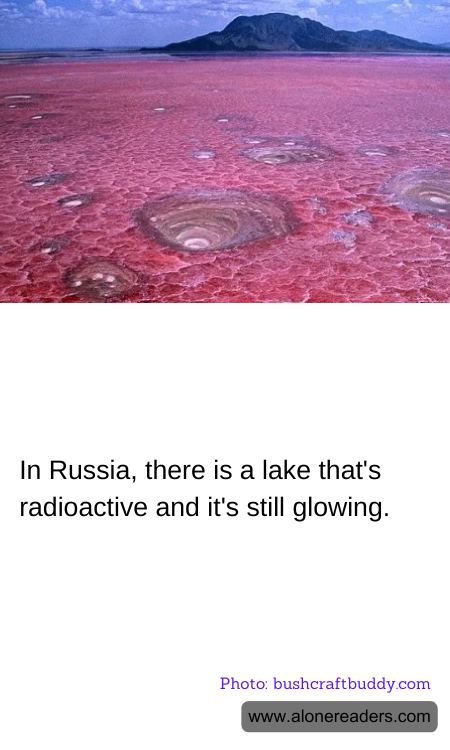
In Russia, amidst the vast landscape of the Siberian region, there exists a lake unlike any other—Lake Karachay. Once used as a dumping ground for radioactive waste by the Soviet Union during the Cold War, this small body of water has garnered the infamous title of being the most contaminated lake on Earth. The level of radioactivity in Lake Karachay is so high that standing beside it for just an hour could be lethal.
Originating from the activities at the nearby Mayak Production Association, one of the largest and leakiest nuclear facilities in Russia, the contamination of Lake Karachay illustrates a dark era of nuclear waste management. Mayak was pivotal in the Soviet nuclear weapons program and began operation in 1948. Throughout the decades, it was the site of numerous nuclear incidents and accidents, including a massive explosion in 1957 that spread radioactive contamination over an area of thousands of square kilometers, an event second only to the Chernobyl disaster in its severity.
The radioactive elements, including cesium-137, strontium-90, and plutonium-239, found in Lake Karachay originated from Mayak's routine disposal of radioactive waste directly into the Techa River and nearby water bodies, including Karachay. This disposal was largely secretive and without regard for environmental impact or future consequences. Over time, the lake accumulated high concentrations of radionuclides, leading to severe environmental and health hazards.
The proximity of Lake Karachay to populated areas and the natural dispersal of its radioactive materials pose significant risks. Wind and water erosion have carried radioactive particles to surrounding areas, affecting local communities and wildlife. The environmental impact extends far beyond the immediate vicinity of the lake, contaminating larger areas and entering the food chain through plants and animals.
Efforts have been made in recent years to mitigate the danger posed by Lake Karachay. The Russian government has initiated containment measures, such as the construction of concrete barriers around the lake to prevent the spread of contaminants. More drastically, there have been attempts to fill the lake with concrete to seal off the radioactive material. Despite these efforts, the legacy of Lake Karachay as a perilous radioactive hotspot endures, a stark reminder of the environmental and human costs of irresponsible waste management and the enduring legacy of the nuclear age.
