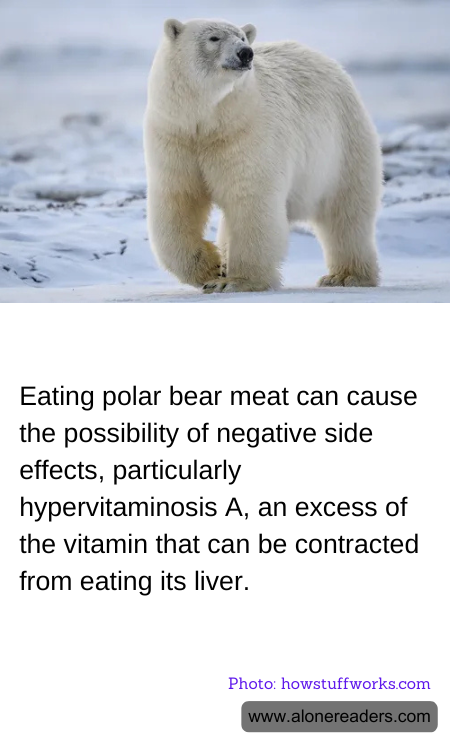
Eating polar bear meat is deeply ingrained in the culinary traditions of some indigenous communities in the Arctic. While the meat is a significant source of protein and other nutrients in regions where plant-based food is scarce, consuming certain parts of the polar bear, especially the liver, carries significant health risks due to high levels of vitamin A.
Vitamin A is an essential nutrient that supports skin health, vision, and immune function, but its intake needs to be carefully managed. Hypervitaminosis A is a condition that occurs when there is too much vitamin A in the body. The liver of the polar bear contains an extraordinarily high amount of vitamin A. Eating even a small amount of polar bear liver can lead to an acute overdose of vitamin A.
Symptoms of acute hypervitaminosis A include dizziness, nausea, headaches, skin irritation, and even more severe effects like hair loss, liver damage, and increased pressure on the brain. The severity of these symptoms can vary based on the amount of liver consumed and the individual's health and nutritional status.
Chronic hypervitaminosis A can occur as well through a build-up over time, leading to osteoporosis and hip fractures due to the negative effects of excess vitamin A on bone health. Pregnant women are particularly at risk as high intakes of vitamin A can lead to birth defects.
Communities that have traditionally consumed polar bear meat have knowledge and practices in place to avoid the consumption of the liver, focusing instead on other parts of the animal. However, those unfamiliar with these traditions might unknowingly consume dangerous parts of the animal. Educating people about the risks associated with consuming polar bear liver is crucial to prevent health complications.
Furthermore, climate change and environmental contaminants also affect the safety of consuming polar bear meat. Pollution can lead to higher concentrations of mercury and other harmful substances in the meat, further complicating its consumption without proper knowledge and handling techniques. Thus, while polar bear meat can be a vital resource for Arctic communities, it requires careful handling and respect for traditional knowledge and practices to ensure its safe consumption.
