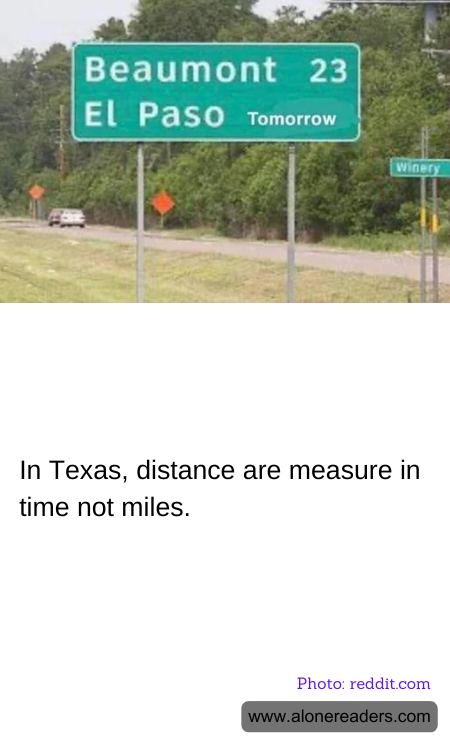
In Texas, a state known for its vast expanses and sprawling landscapes, residents often measure distance in terms of travel time rather than miles. This unique approach to gauging distance stems from the state's sheer size and the variable nature of travel conditions influenced by sparse population densities, traffic, and road types across different regions.
Texas is the second-largest state in the U.S., encompassing various geographical zones, from deserts and prairies to forests and coastlines. In such a region, the number of miles between two destinations doesn't always tell the whole story about the journey. For instance, driving from El Paso to Houston covers around 750 miles, but the key information for Texans is that it takes about 10 hours. This time-centric measurement provides a more practical sense of distance, especially in planning travel and managing time effectively.
Moreover, the diverse conditions in which Texans drive play a crucial role in this perspective. In rural areas, where the roads may be less congested, the speed can be faster, but stoppages are rarer, making the drive smoother yet longer in duration. Conversely, in densely populated cities like Dallas or Austin, heavy traffic can significantly slow travel times, despite shorter distances. This factor makes it almost essential to consider time over miles when estimating the length of a journey.
Additionally, the cultural aspect of car travel in Texas, where road trips are a popular means of exploration and transportation, furthers the significance of measuring distance by time. It aligns with the laid-back, yet pragmatic nature of personal and business travel across the state, where understanding how long a trip will take tends to be more useful than knowing how far one will go.
The time-based measurement system also simplifies communication about distance and travel plans among Texans. It's a practical shorthand that effectively sets expectations for travel length, helping to manage the uncertainty that often comes with road conditions and traffic variations.
In essence, while measuring distance in time rather than miles might seem quirky to outsiders, it is a practical adaptation to the geographical and cultural realities of living and traveling in the vast and diverse landscape of Texas. This method reflects not just a practical need, based on the state’s unique characteristics, but also a deeper, more ingrained part of the Texan identity.
