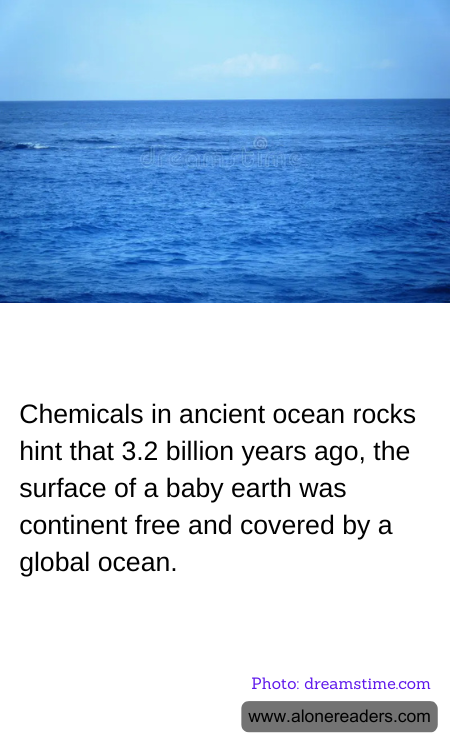
Three billion years ago, Earth might have been an unrecognizable vast blue planet completely shrouded in water, with no continents dividing the ocean. Recent scientific studies of ancient oceanic rocks suggest that Earth's early surface was likely covered entirely by a global ocean. This research points to an intriguing phase in our planet's geological and biological evolution. Chemical signatures within these ancient rocks indicate changes in oceanic compositions over time, suggesting dynamic processes beneath the ocean-covered surface.
By examining specific isotopes in rocks dated back to 3.2 billion years ago, scientists have inferred that the chemical composition of seawater was considerably different from what we see today. These isotopes provide clues about the types of rocks that were present on the ocean floor and hint at the absence of continental rocks, which typically contribute different chemical signatures compared to oceanic rocks. The lack of these typical continental signatures supports the theory that early Earth was devoid of large landmasses.
This predominantly aqueous environment could have profound implications for understanding the early life forms on Earth. The global ocean might have provided stable, widespread habitats for the first microbial life forms, which thrived without the pressures and competition found in more diverse ecosystems like those that developed later. Additionally, the global ocean would have influenced Earth's early climate, possibly creating a more temperate atmosphere conducive to the development of life.
Unraveling the mystery of Earth's missing continents also helps scientists understand plate tectonics' role and how continental crust eventually formed and transformed. The formation of continents could have begun as minor proto-continents that slowly grew bigger and more complex over hundreds of millions of years. These shifts would set the stage for significant changes in Earth's biosphere, atmosphere, and the chemical makeup of oceans.
Deciphering the clues locked in ancient stones not only paints a better picture of our planet’s past but also illuminates the processes that shaped the composition of our current landscape. These findings provide a fascinating glimpse into a time when Earth was a very different world, illustrating the dynamic, ever-changing nature of our planet.
