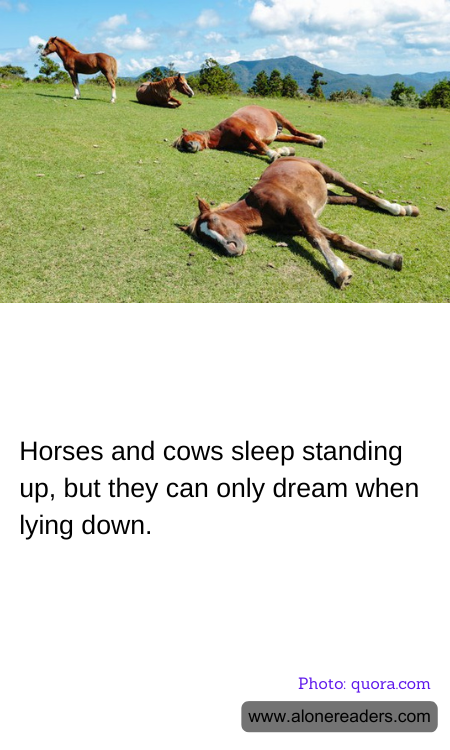
Many might find it surprising to learn that both horses and cows have the ability to sleep standing up. This interesting adaptation is primarily a defense mechanism, allowing these animals to quickly escape threats without the need to first rise from a lying position. The anatomy of these animals supports this behavior through a special arrangement called the "stay apparatus" in horses, and a similar mechanism in cows, which allows their muscles and ligaments to lock in place, thereby enabling them to relax without collapsing.
Despite this capability, the sleeping patterns of horses and cows are more complex and stratified than simply standing up all the time. While these animals can doze and enter light sleep phases while standing, the deeper, more restorative stages of sleep, including REM (Rapid Eye Movement) sleep where dreaming occurs, can only be achieved while lying down. During REM sleep, the body must be in a relaxed state, which cannot be adequately supported while standing. This stage of sleep is crucial for brain function, memory consolidation, and overall health.
For horses and cows, lying down to sleep and dream is not merely a function of comfort but a necessity for full psychological and physiological restoration. However, they tend to lie down for relatively short periods due to their size and the risk of pressure on their internal organs, which can be problematic if they remain down too long. This behavior reflects a delicate balance between vulnerability and necessity, highlighting the complex nature of these seemingly straightforward behaviors.
The environments in which horses and cows live can significantly influence their ability to lie down safely to reach REM sleep. For instance, in natural settings, herds often take turns resting while others stand guard against potential threats. Domestic environments should similarly provide safe, comfortable resting areas to ensure these animals can achieve both light and deep sleep stages adequately. Understanding these needs is vital for animal welfare and can lead to more effective management practices for those who care for these large, domesticated mammals.
