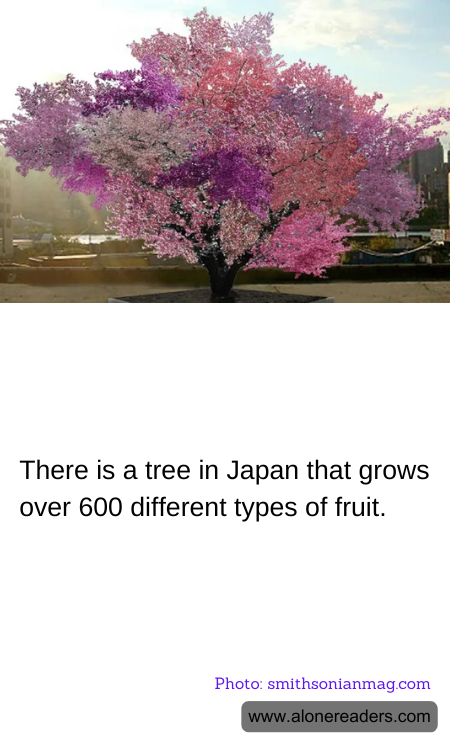
In the field of botanical marvels, Japan hosts one of the most extraordinary examples: a single tree that produces over 600 different types of fruit. Known as a “fruit salad” tree, this astonishing plant is a result of intricate grafting techniques that have been refined and passed down through generations of skilled horticulturists. This tree is not just a novelty; it represents a convergence of science, art, and nature.
The concept behind the fruit salad tree is relatively simple in theory but complex in practice. Grafting, the process used to create such trees, involves splicing branches from different fruit trees onto a single root system. Each branch, called a scion, retains the characteristics of its original tree, allowing the base tree to bear various fruits. This can include a mix of apples, peaches, cherries, plums, and even apricots, all flourishing on one tree. The grafts must be carefully selected and matched to the rootstock so that they are compatible in their growth requirements and environmental needs.
The creation of a fruit salad tree is a meticulous and time-consuming process. Each graft must be carefully made to ensure that the vascular tissues align properly, allowing for the efficient transfer of nutrients and water. The tree needs to be diligently monitored and pruned to maintain balance among the various fruits and to ensure that none outgrow or overtake the others. This balance is vital not only for the health of the tree but also for the quality and quantity of the fruit it produces.
Cultivating such trees has significant practical and environmental benefits. For one, it allows for the maximization of space, making it an ideal option for small gardens or urban areas where planting space is limited. Additionally, it can contribute to biodiversity and the preservation of different fruit varieties, many of which might be rare or historically significant.
Beyond its practical applications, the fruit salad tree is a symbol of innovation in traditional practices. It highlights a unique blend of cultural heritage and modern gardening technology, making it a fascinating subject of study for botanists and horticulturists around the world. For visitors and locals in Japan, it also provides a tangible link to the rich agricultural history and ingenuity of the region. As such, the fruit salad tree is not only a horticultural success but also a cultural and scientific artifact worth cherishing.
