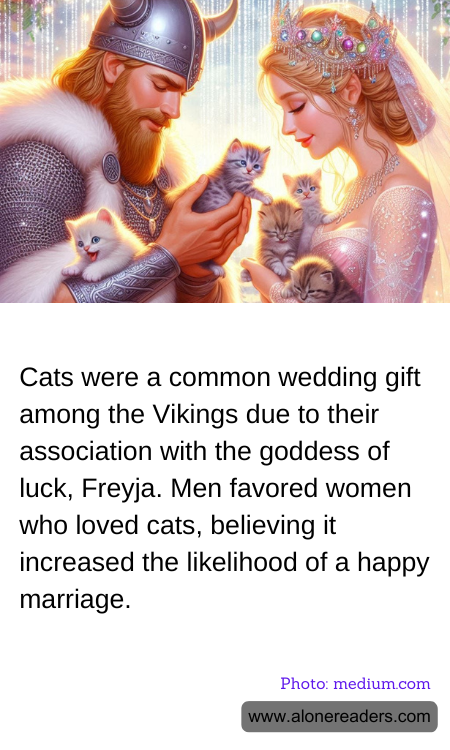
In the intriguing cultural tapestry of the Vikings, cats held a significant and somewhat mystical status, largely due to their association with Freyja, the Norse goddess of love, beauty, and fertility, as well as luck. Freyja, a key deity in Norse mythology, was often depicted with a chariot drawn by cats, further elevating their stature. This divine connection made cats auspicious symbols in Norse culture, believed to bring good fortune and prosperity.
Given this cultural context, it is no surprise that cats were commonly given as wedding gifts among the Vikings. Such gifts were more than mere tokens of affection; they symbolized a blessing to the newlywed couple, invoking Freyja’s favor and thereby increasing the chances of a successful and happy marriage. This tradition underscores the profound role that spiritual and superstitious beliefs played in Viking societal norms and personal relationships.
Moreover, the preference for cats went beyond the supernatural, influencing social dynamics and personal relationships. Men particularly favored women who loved cats, believing that these women would be blessed by Freyja. This preference can be seen as an early recognition of the emotional or psychological benefits of pet ownership which many cultures have come to acknowledge. Loving cats was perceived not only as a sign of good character but also as a marker of a woman's alignment with feminine virtues and divine favor, qualities highly esteemed in Viking society.
This cultural practice highlights the broader significance of animals in Viking life, where they often transcended their immediate physical utility to embody deeper spiritual and symbolic meanings. Cats, in this context, were more than pets or pest controllers; they were integral to the spiritual and emotional fabric of Viking marital life. This reverence for cats as symbols of luck and favor in love and marriage shows the depth of the relationship between Viking religious beliefs and their everyday lives, revealing an aspect of their civilization that went beyond the raids and warfare for which they are so famously known.
