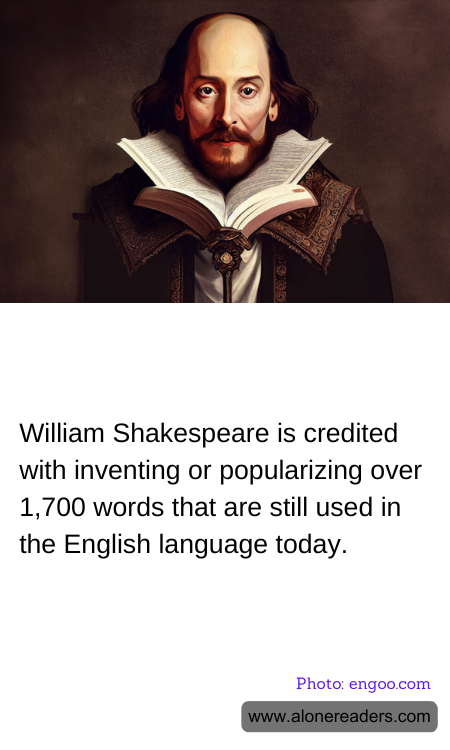
Popularly known as the Bard of Avon, William Shakespeare was not only a renowned playwright and poet, but he was also a prodigious wordsmith whose contributions to the English language are unparalleled. His works, ranging from tragic to comedic, have left a lasting impact on literature and linguistics. With a flair for creativity, Shakespeare is credited with inventing or first documenting over 1,700 words that are still commonly used in modern English. This remarkable feat was partly necessitated by the constraints and limitations of the English language during the Elizabethan era, which lacked the vocabulary needed to express the subtleties and nuances required in his plays.
Shakespeare’s linguistic innovations include a wide array of words by changing nouns into verbs, verbs into adjectives, connecting words never before used together, adding prefixes and suffixes, and devising words wholly original. For example, the word "swagger" first appeared in "A Midsummer Night's Dream" and "Henry V." The term "lonely" was first recorded in "Coriolanus," and words like "gloomy," "laughable," and "radiance" also found their initial print lives in the pages of his plays and sonnets. The expression "wild-goose chase" was introduced in "Romeo and Juliet," enriching the language with a vivid new idiom.
Shakespeare’s creative verbiage extended beyond individual words, impacting phrases and idioms as well. Expressions such as "break the ice" and "fair play" are attributed to him and are notably still common in everyday language. His ability to capture the essence of human experiences and emotions in innovative and relatable ways increased both the expressiveness and the beauty of the English language.
The impact of Shakespeare on the evolution of English extends beyond vocabulary. His innovative grammatical structures and rhythmic patterns have also influenced the way the English language is used and taught. The prolific use of iambic pentameter in his works has been a significant study in the rhythm and meter of English. Shakespeare’s influence shows that individual creativity can significantly enrich a language, providing it with a dynamic and evolving capacity for expression. It is a testament to his genius that after several centuries, Shakespeare's words and phrases remain an integral part of the lexicon, showcasing the lasting power of his contribution to English literature and linguistics. This vast addition of words by a single person is reflective of not only intelligence and creativity but also an enduring influence that transformers and enriches a culture.
