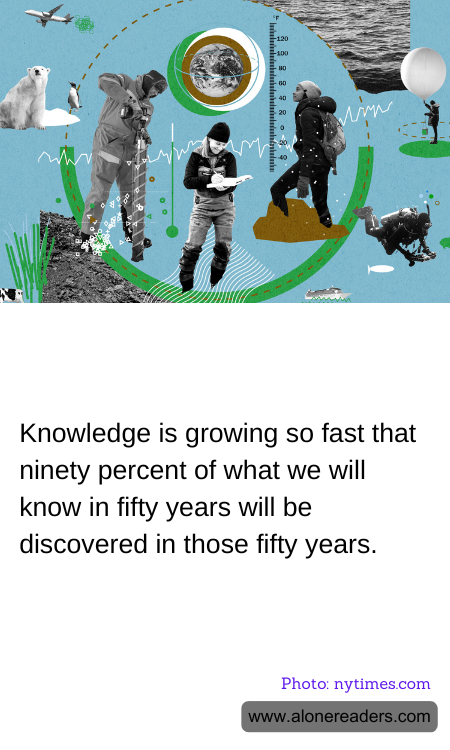
The pace at which knowledge is expanding is truly astonishing. Modern technologies and methodologies have enabled scientists, researchers, and professionals across various disciplines to discover vast amounts of new information swiftly and efficiently. This rapid growth in knowledge means that much of what we understand about the world today will be vastly outdated in the not-so-distant future. As projected, if ninety percent of what we will know in fifty years is yet to be discovered, this suggests a revolutionary change in our understanding and capabilities.
Such accelerated growth in knowledge can be attributed largely to improvements in technology. For instance, data collection has grown exponentially with the advent of the internet and big data technologies. This has provided researchers access to a much wider array of data than ever before. Moreover, advancements in computing power allow complex analysis and modeling that were not possible before, propelling forward scientific and technological fields at an unprecedented rate.
This immense anticipated expansion of knowledge will have profound effects on education and workforce requirements. Educational institutions will need to adapt by continually updating curricula and incorporating the latest advancements to prepare students for future demands. Lifelong learning will become more crucial than ever as professionals strive to keep up with new knowledge and skills.
Furthermore, this explosion of knowledge casts a spotlight on the ethical implications of discovery and application. With new capabilities, particularly in fields like artificial intelligence, genetics, and nanotechnology, come new responsibilities and ethical dilemmas. It also raises questions about equity in access to knowledge and technology across different regions and societies.
Anticipating that most of what we know will change in the next fifty years also highlights the importance of fostering critical thinking and adaptability in young learners today. It’s not just about learning current facts, but also about how to approach the unknown and solve problems that do not yet exist.
Overall, the projection that ninety percent of our knowledge in fifty years is yet to be discovered is both exhilarating and daunting. It suggests a future that is rich with discovery and innovation but also challenges current educational structures and ethical frameworks to evolve. Embracing this continual change, fostering curiosity, and preparing for lifelong learning are essential as we advance into this uncharted future.
