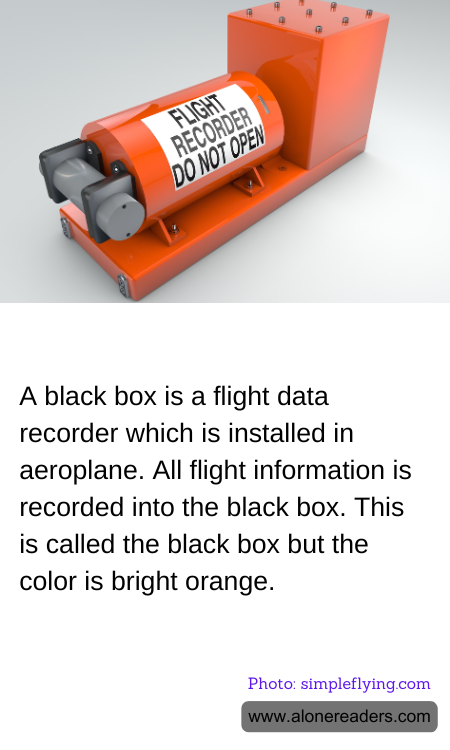
Despite its misleading name, the black box is an essential piece of equipment on board an aircraft, crucial for both safety enhancements and accident investigations. The term "black box" refers to either the flight data recorder (FDR) or the cockpit voice recorder (CVR), both of which are typically housed together in a bright orange casing to make them easily identifiable amid wreckage following an accident.
The black box is designed to survive extreme conditions that can occur during a plane crash, including fire, water submersion, and high impact forces. The outer shell of the black box is built from the most resilient materials available, such as stainless steel or titanium, and is insulated with high-temperature-resistant materials. This rugged exterior ensures that the data stored inside remains protected.
Inside a black box, a variety of flight information is continuously recorded. The FDR collects comprehensive data about the aircraft's performance, including parameters such as altitude, airspeed, and heading, as well as other critical data like engine performance and flight control settings. The CVR, on the other hand, records all conversations in the cockpit and with air traffic control, along with other auditory cues in the cockpit such as switches clicks or alarms. This audio record is invaluable for reconstructing events leading up to an incident.
After an accident, investigators will seek out the black box to help them decipher what went wrong. The data contained within can provide crucial insights into the technical and human factors that contributed to the incident. Analysis of this data can lead to important safety measures and has historically led to significant improvements in aviation regulations, aircraft design, and pilot training programs.
While the name "black box" originally referred to early rudimentary systems that were actually housed in dark-colored boxes, today's devices are intentionally bright orange to facilitate their retrieval after accidents. The stark color, along with an underwater locator beacon, helps search teams find the recorders in the chaos of crash debris.
Thus, these devices, while erroneously named, are pivotal to aviation safety, assisting not just in understanding accidents after they occur but also in preventing future ones by providing actionable data to improve aircraft technology and aviation practices.
