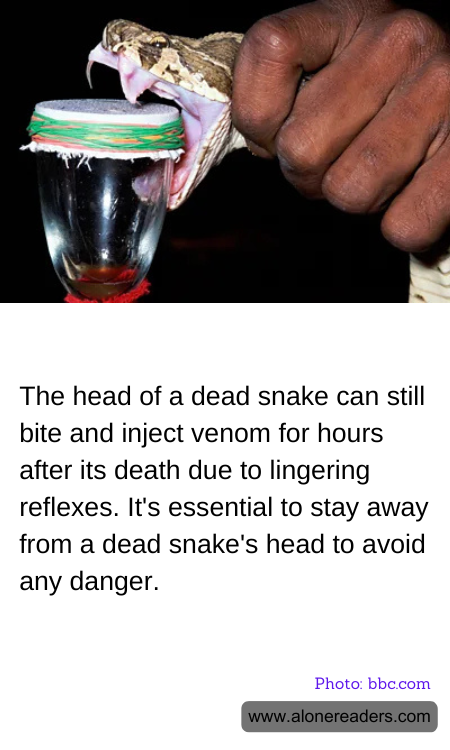
After a snake is dead, its head can indeed pose a danger for several hours due to residual nerve reflexes that can trigger a bite. This surprising phenomenon occurs because the neurons in the snake's body can remain active and capable of reflex actions even when deprived of central brain control and oxygen. The snake's heat-sensitive pits, used to detect prey, are also still functional after death, causing these reflexes to react to heat and movement.
Venomous snakes, like rattlesnakes, cobras, and vipers, store their venom in sacs located within their head. This venom remains potent after the snake's death, and a reflexive bite could still deliver a full load of venom. In fact, there have been numerous documented cases where individuals received envenomation from handling or manipulating the head of a supposedly dead snake.
For safety, it's advised to never handle a dead snake by its head. Using tools like a snake stick if one must move a dead snake is recommended, or better yet, avoiding touching the snake altogether. Informing local wildlife control or a professional handler about a dead snake's location is the safest course of action. This is particularly critical in areas where venomous snakes are common, as they pose a significant risk even in death. Such precautions help prevent unnecessary injuries from these deceivingly dangerous dead animals.
