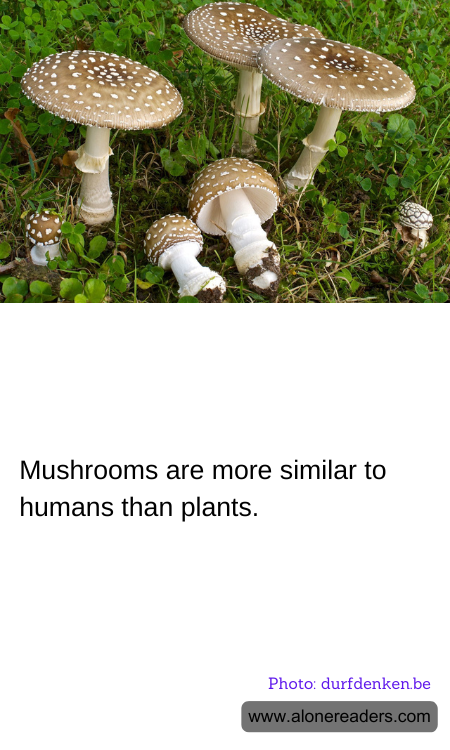
Mushrooms inhabit a unique position in the natural world, straddling the line between the curious constructs of flora and the dynamic systems of fauna. Unlike plants, which thrive through photosynthesis, mushrooms belong to the kingdom Fungi, a domain distinct both from plants and animals, yet intriguingly exhibit characteristics reminiscent of both. Fascinatingly, scientific studies have revealed that mushrooms share more DNA with animals than with plants, leaning closer to humans on the tree of life than the leafy green neighbors in their forest homes.
This biological relationship can be traced to the way fungi and animals digest nutrients. Both mushrooms and humans rely on an external source of food; they absorb nutrients from their surroundings, as opposed to producing their own food through sunlight as plants do. This absorptive mode of nutrition involves secreting enzymes to break down organic matter outside their bodies. The digested products are then absorbed through their cells, a process strikingly similar to how humans digest food.
Mushrooms also share with humans the complexity of their reproductive processes, involving multiple stages and forms that can be as intricate as any found among animals. Furthermore, the cellular structures of fungi feature a composition of chitin in their cell walls, a material more commonly associated with animals; insects, for example, use it to form their hard exoskeletons. Plants, on the other hand, use cellulose for their cell walls.
Even at a molecular level, certain comparisons can be drawn between humans and mushrooms that underscore their surprising relationship. Both organisms produce molecules and proteins that bear a resemblance in function and structure. Interestingly, some of the essential enzymes and other secondary metabolites found in the human body are also seen in fungi, although their roles in humans and mushrooms might serve different purposes, reflecting the evolutionary divergence despite shared ancestral traits.
The implications of these similarities are profound, influencing everything from environmental conservation to medicine. In the realm of pharmaceuticals, for instance, mushrooms have been a goldmine for developing antibiotics and other drugs. Penicillin, the world's first antibiotic, was derived from a fungus, marking the beginning of a long and continuing journey into biomedicinal research heavily influenced by fungal properties.
In summary, while mushrooms might seem as typical embodiments of the fungal world, their genetic makeup and physiological processes narrate a story of unexpected kinship with humans. This alignment not only highlights the interconnectedness of life forms but also broadens the horizon for scientific research and application possibilities spanning health, ecology, and beyond. Understanding these links can lead to greater insights into our own biology and the ecosystems we share with these remarkable organisms.
