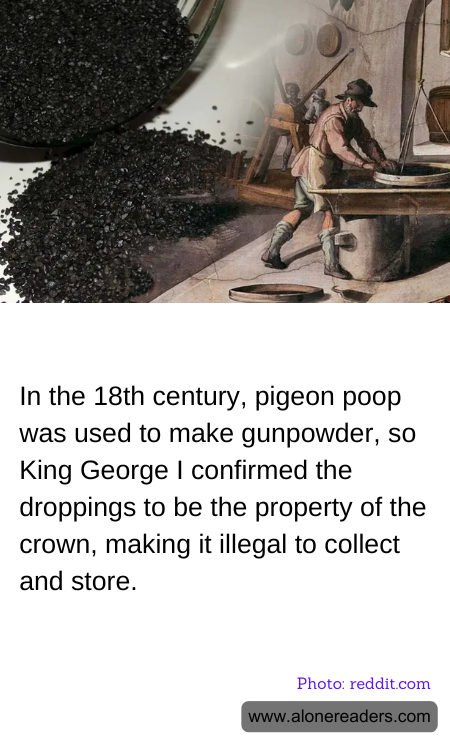
In the 18th century, the value of pigeon droppings transcended mere agricultural use due to its key component, saltpeter (potassium nitrate), a crucial ingredient in the manufacture of gunpowder. The demand for gunpowder was consistently high during this period, driven by military needs amid ongoing wars and expanding empires. Recognizing the strategic importance of controlling saltpeter, King George I took an unusual but pragmatic step to secure a steady supply of this vital resource.
By declaring pigeon droppings to be property of the Crown, King George I effectively made it illegal for private individuals to collect or store pigeon poop without authorization. This royal decree was more than just a quirk of monarchial control; it was a necessary move to ensure that the government had sufficient supplies of gunpowder. Saltpeter mining and collection were laborious and the addition of pigeon droppings simplified the extraction process, as the droppings naturally contain nitrate compounds which could be converted into pure potassium nitrate through various refining processes.
Because pigeon droppings were easier to collect than earth-bound nitrate deposits, they became highly valued. By monopolizing this resource, the Crown could control the production of gunpowder. The regulation of saltpeter was not unique to England; similar practices were observed in other countries too. For example, in France, during the reign of Louis XIV, the collection of saltpeter was also regulated, as the king had inspectors who would authorize the scraping of cellars and caves for nitrate-rich earth, which was then used in the gunpowder production.
The strategic importance of pigeon poop in the 18th century is a fascinating example of how natural resources have been historically utilized in warfare logistics. It underscores the lengths to which governments would go to ensure their armies were well-supplied in an era where firepower often determined the outcomes of conflicts. While it might be hard to imagine today, the control over something as seemingly mundane as pigeon droppings once played a pivotal role in the power dynamics of nations.
