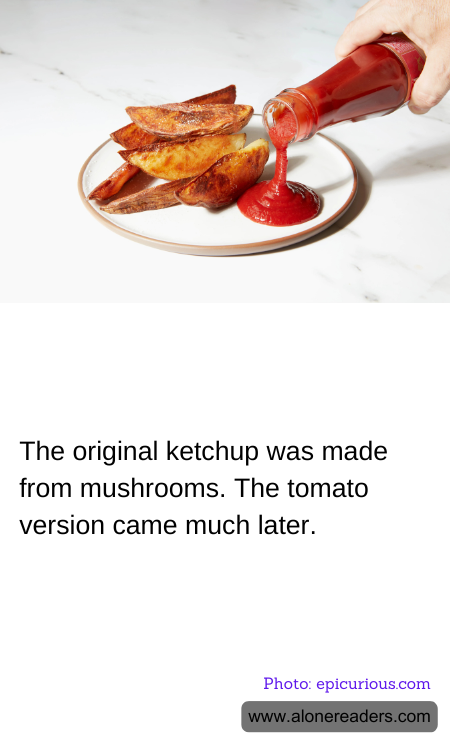
Ketchup, one of the most ubiquitous condiments on dining tables across the globe, boasts a history that few of its avid users might know. Long before it evolved into the thick, sweet, tomato-based staple we slather on fries, burgers, and more, ketchup started its culinary journey from a very different origin. The original ketchup was indeed not made from tomatoes but from mushrooms.
This earliest form of ketchup was likely introduced to European palates in the 17th century through British contact with Asian cultures, particularly in places like China, Malaysia, and Singapore. Here, variations of ketchups were common as a means of preserving the flavor of a vast array of foods. These traditional ketchups were often created using fermented fish or soybeans. However, the British adaptation took a distinct turn by adopting mushrooms as the primary ingredient. This mushroom ketchup was a thin, dark, and savory sauce made by packing mushrooms with salt. The mixture would then be set aside several days until the juices were released, subsequently cooked down and sometimes enhanced with spices like mace or nutmeg.
By the 18th century, mushroom ketchup was a popular sauce in Great Britain, celebrated for its ability to add a rich, umami flavor to a variety of dishes. It was during this era that recipes began to evolve, and other versions started to appear, including walnut ketchup and even anchovy ketchup.
Tomatoes were introduced to the ketchup recipe much later. Despite being native to the Americas and known to the Spanish since the 16th century, tomatoes weren't widely accepted in European diets initially, largely due to misconceptions about their edibility. It wasn't until the 19th century, particularly in the United States, that tomatoes became a common ingredient. Tomato ketchup emerged during this period when innovations in preservation and a growing abundance of tomatoes met the culinary scene. In 1812, the first known recipe for tomato ketchup was documented by scientist James Mease in Philadelphia, who referred to tomatoes as "love apples". The recipe eventually set off the transformation of ketchup’s production and flavor profile.
The creation of tomato ketchup met such success that it not only surpassed mushroom ketchup in popularity but also began to redefine what the word "ketchup" meant to most people. By the late 19th and early 20th centuries, commercial production of tomato ketchup was in full swing with brands like Heinz leading the way, pioneering the production process and standardization that resulted in the sweet, viscous condiment known today. Mushroom ketchup still exists, though it is now considered more of a niche or gourmet product, a reminder of the condiment's diverse and storied past.
