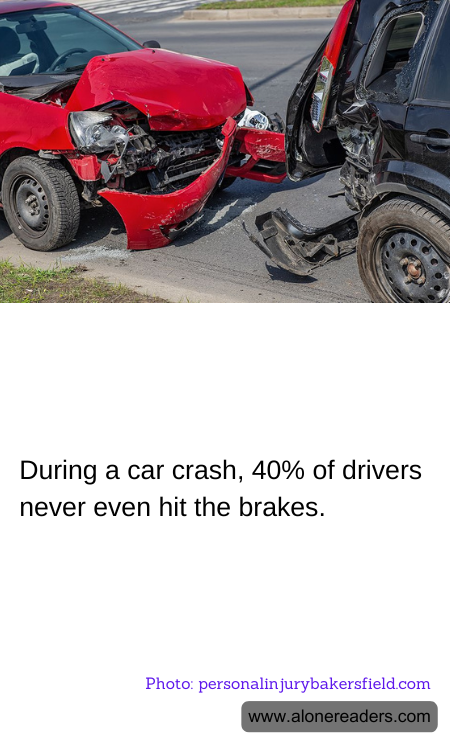
Car accidents are unfortunately common, yet what is perhaps more alarming is that 40% of drivers do not engage their brakes before a collision occurs. This statistic underscores a potentially overlooked aspect of road safety: the critical seconds before an impact. Various factors explain why such a large percentage of drivers fail to take evasive action by braking.
Firstly, distraction plays a significant role. In our increasingly connected world, drivers often divert their attention away from the road to deal with electronic devices, like smartphones, or other in-car distractions. This loss of focus means they might not notice the need to stop until it's too late. Secondly, high speeds can reduce reaction time significantly. At increased velocities, the events leading up to a crash can unfold too quickly for a driver to process the required response. Furthermore, environmental conditions such as fog, heavy rain, or even the glare of the sun can impair a driver's visibility and lead to late or non-existent braking.
Another contributing factor could be the assumption by some drivers that modern safety features like automatic emergency braking (AEB) will take over in the case of an impending collision. This reliance on technology can sometimes backfire, especially if the system fails or does not activate in time.
Education and technology are both crucial in addressing this issue. Driving education programs that emphasize situational awareness and defensive driving can prepare drivers better for unexpected events. Additionally, improving and widely adopting advanced driver-assistance systems (ADAS) such as AEB can help reduce the incidence of crashes where drivers fail to brake in time.
The fact that nearly half of all drivers involved in crashes don't hit the brakes reveals a gap in road safety practices that needs to be addressed through better driver training, stricter laws against distracted driving, and enhanced vehicle safety features. Through a combined effort of policy, education, and technology, roads can be made safer, potentially saving lives by ensuring drivers are fully aware and responsive in the critical moments before a crash.
