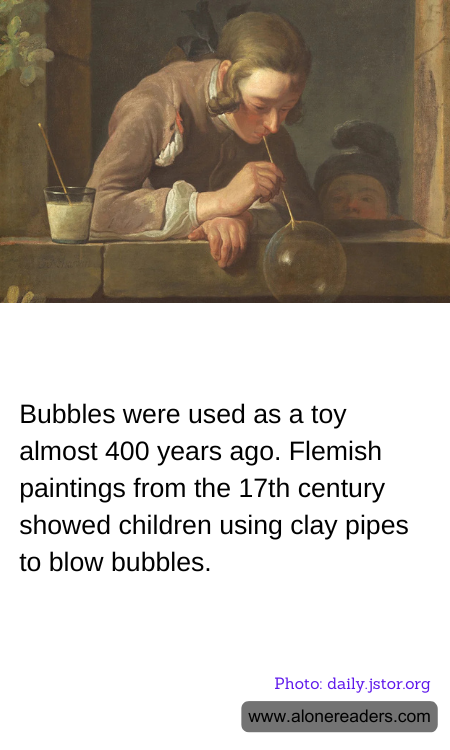
The enchanting play of children blowing bubbles, which captures a blend of artistry and innocent joy, has been a subject of delight long before modern toys filled the shelves. Historical records, particularly Flemish paintings from the 17th century, provide a fascinating glimpse into the early use of bubbles as a form of play. In these artworks, children can be seen using clay pipes to blow bubbles, illustrating not only an early appreciation for the simple joys of bubble play but also the use of accessible materials to create such moments of pleasure.
These clay pipes, originally designed perhaps for more practical or adult-oriented purposes, were appropriated by children for their play, showing the dual nature of many historical objects. The soap solution used was likely a rudimentary mixture compared to today's specially formulated bubble solutions, but the effect was magical enough to merit inclusion in fine art.
The depiction of bubble blowing in art underscores its value to society at the time—signifying both the innocence of youth and the universals of human nature. The bubbles themselves, delicate and fleeting, might have represented the ephemeral nature of life and beauty, a theme resonant in much of Baroque art. Thus, this imagery was not merely about children at play but spoke to deeper reflections on life and existence.
Today, bubble blowing has evolved from clay pipes to plastic wands and automated bubble machines, making it easier and more spectacular than ever for children and adults alike to enjoy. The industry around bubble-making has also grown, with numerous innovations creating longer-lasting and more colorful bubbles.
Nevertheless, the core joy derived from watching a bubble float gracefully into the air before bursting silently remains unchanged from 400 years ago. This simple activity continues to be a universal favorite, transcending generations and cultures, a testament to its enduring appeal and perhaps a nod to those 17th-century artists who first captured its magic on canvas. This historical continuity not only enriches the activity's enjoyment but also connects us with the playfulness and curiosity of the past, reminding us that delight in simple pleasures is a timeless aspect of the human experience.
