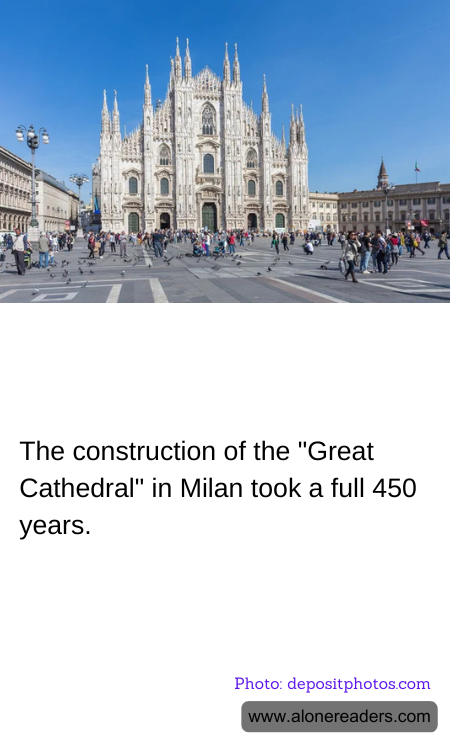
The construction of the Milan Cathedral, famously known as the "Great Cathedral," is a perfect exemplification of enduring architectural endeavors, spanned over nearly half a millennium. Initiated in 1386, under the vision of Archbishop Antonio da Saluzzo, the cathedral's construction was an ambitious project of the Veneranda Fabbrica del Duomo, the organization specifically created to supervise the construction. This period was characterized by a bold gothic architectural style that was sweeping across Europe, particularly in France.
Milan Cathedral stands out not only for its massive size but also for its intricate gothic style that includes vast naves, spires, flying buttresses, and an overwhelming number of sculptures. In fact, it is one of the largest cathedrals in the world and arguably the most ornate. Its construction required the resources of several European countries, and over the centuries, a plethora of architects, artisans, and workers contributed to its completion.
The reasons behind its protracted construction period are manifold. Initially, the technological and engineering challenges were significant. The builders had to deal with the weight of the enormous structure, ensuring stability while aspiring for great heights and aesthetic grandeur. Political and economic changes also played a role. The cathedral's construction was often interrupted by wars, changes in political regimes, and financial constraints.
The cathedral's design evolved over the years. Initially conceived in a Rayonnant Gothic style, later additions bore marks of the Renaissance and Baroque periods, reflecting the changes in artistic and architectural preferences over the centuries. This blend of styles has given the Milan Cathedral its unique aesthetic character.
By the time it was completed in the 19th century, under the watchful eye of Napoleon Bonaparte who was keen to see its completion prior to his coronation as King of Italy in 1805, the Milan Cathedral had become not just a religious sanctuary but a symbol of faith, resilience, and architectural innovation. The cathedral today not only serves as a house of worship but is also a major tourist attraction, a testament to the skill and perseverance of generations of builders. Its lengthy construction narrative tells of the intermixing of culture, art, and history, resonating with visitors from across the globe.
