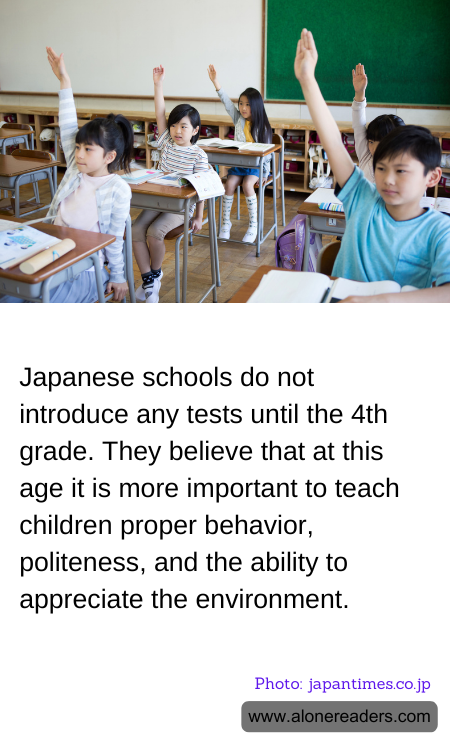
In Japan, the education system takes a unique approach by not introducing formal exams to students until they reach the 4th grade, around the age of 10. Prior to this, the focus is primarily on cultivating moral values, good behavior, and a respect for their surroundings rather than academic achievement. This fundamental aspect of Japanese education is rooted in the belief that the early years of schooling should be dedicated to developing a child’s character, which is considered just as crucial as intellectual growth.
From the first grade, Japanese children are taught manners, how to be considerate of others, and the importance of cooperation. This emphasis on moral education can be observed in various school activities that include group work, club activities, and school roles, which are designed to foster a sense of community and teamwork. Equally important is the development of “jikkan,” a sense of empathy and understanding towards others, which is highly valued in Japanese society.
Moreover, children are also instructed on the importance of nature and their environmental responsibilities. Lessons often extend beyond the classroom as children engage in local community clean-up activities, learning to care for and appreciate their environment directly. The curriculum is designed to make students aware of their interactions with the world around them, instilling a deep seated respect for nature and society.
This educational framework helps in creating well-rounded individuals who not only excel academically in later years but are also mindful, ethical members of society. Starting from the fourth grade, when academic testing and more rigorous educational activities begin, Japanese students are already well-prepared. They not only have a solid foundation of knowledge but also the soft skills that are necessary for success in all areas of life.
This approach contrasts significantly with the education systems in many Western countries, where academic performance is emphasized from a much earlier age, sometimes at the expense of essential social and ethical development. The Japanese model highlights a balanced approach to education, valuing character formation equally with intellectual growth, which might offer a valuable perspective to education reform discussions globally.
