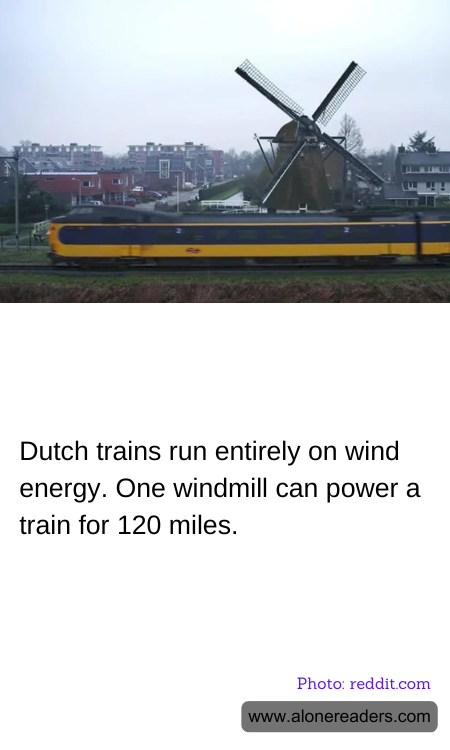
As the world increasingly turns towards sustainable energy solutions, the Netherlands has positioned itself as a leader in green transportation by powering its entire electric train network with wind energy. This innovative approach not only underscores the country's commitment to renewable energy but also sets a powerful example globally.
One of the most striking aspects of this initiative is the efficiency and potential of wind energy in powering public transportation systems. It is reported that a single windmill running for an hour can generate enough energy to drive a train for up to 120 miles. This statistic is not just impressive; it's a game-changer, offering a glimpse into a future where all public transport could potentially run on renewable energy.
This transition to wind energy began as part of an agreement between Dutch railways and energy company Eneco in 2015. The goal was straightforward yet ambitious: to run the country's entire train system on 100% sustainable energy by 2018. Remarkably, they achieved this target a year ahead of schedule, by January 2017. Today, every electric train on the Dutch network, from quick intercity services to slower regional lines, receives its power through the sustainable breeze.
The benefits of this shift are manifold. Firstly, it significantly cuts down carbon emissions, contributing to the fight against climate change. Trains are already one of the most energy-efficient forms of public transport, and the switch to wind power makes train travel in the Netherlands virtually emission-free. Secondly, this reliance on local wind energy also enhances energy security and creates a buffer against fluctuations in the global energy market.
Moreover, this initiative has fostered further innovation and development within the renewable energy sector. It serves as a catalyst, encouraging other nations to explore similar sustainable practices in transportation. The Dutch example proves that comprehensive, nation-wide transportation systems can indeed operate on renewable energy—specifically, that they can be powered effectively by the natural and abundant force of the wind.
As countries worldwide seek more sustainable energy solutions and ways to reduce their environmental impact, the Dutch railway system serves as a pioneering model. It not only exemplifies the practical implementation of green technology in public transport but also highlights the importance of governmental and corporate commitment to environmental sustainability. This Dutch achievement propels the idea forward that with thoughtful investment and innovative strategies, renewable energy can feasibly and efficiently power large-scale public infrastructure.
