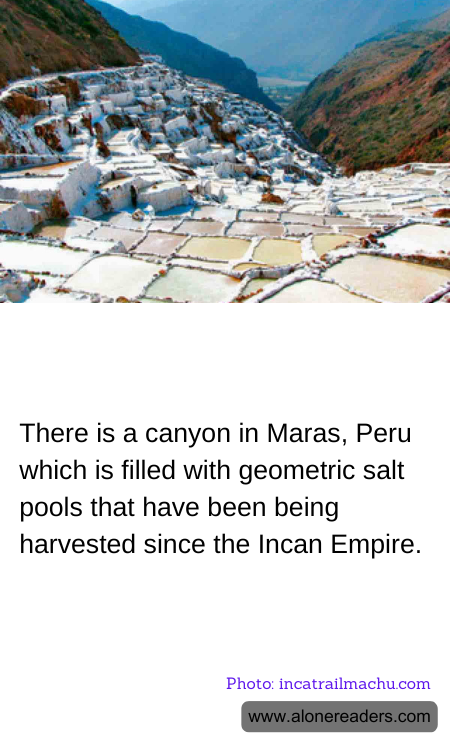
Nestled in the Sacred Valley of the Incas, near Maras in Peru, lies an extraordinary and ancient site: the Maras salt ponds. These salt pans not only offer a picturesque view akin to an abstract mosaic of varying shades, from creamy whites to rustic reds, but also provide a unique glimpse into centuries-old methods of salt harvesting.
The Maras salt ponds have been in operation for more than 500 years, predating even the Incan Empire. The Incas, however, expanded and perfected this ingeniously sustainable method of salt production, which utilizes subterranean salty water springing from within the Andean mountains. The salty water is directed through an intricate system of tiny channels into hundreds of shallow, geometrically shaped ponds that cover the slopes of the canyon. As the water evaporates under the harsh sun, it leaves crystallized salt behind which is then gathered by hand by the local families who own and maintain the ponds.
The process is communal and labor-intensive, with each family responsible for their own distinct ponds. This has been a traditional activity passed down through generations, reminiscent of ancient practices and closely tied to the community’s identity and rhythms of life. The harvested salt is known for its rich minerals and unique flavor, cherished both locally and now increasingly sought after by gourmet chefs around the world.
Interestingly, the salt ponds at Maras also tell a deeper story about adaptation and survival. They serve as an exemplary model of sustainable resource management, where natural elements are skillfully harnessed without depleting them. The method of using evaporation ponds has allowed people to continuously produce salt without the need for modern machinery or technology, remaining largely unchanged through centuries.
While primarily functional and a source of livelihood, the Maras salt ponds are also emerging as a tourist attraction. Visitors to this site can walk along paths that overlook the pans, witnessing a stunning landscape that is both an active archaeological site and a working piece of agricultural heritage. This balance of beauty, history, and continuing utility makes the Maras salt ponds a fascinating destination for those interested in history, culture, and sustainable practices.
Ultimately, the salt ponds of Maras stand as a testament to the ingenuity of ancient peoples and a reminder of how traditions can endure, continue to serve modern needs, and fascinate those who come to marvel at this blend of nature and human endeavor.
