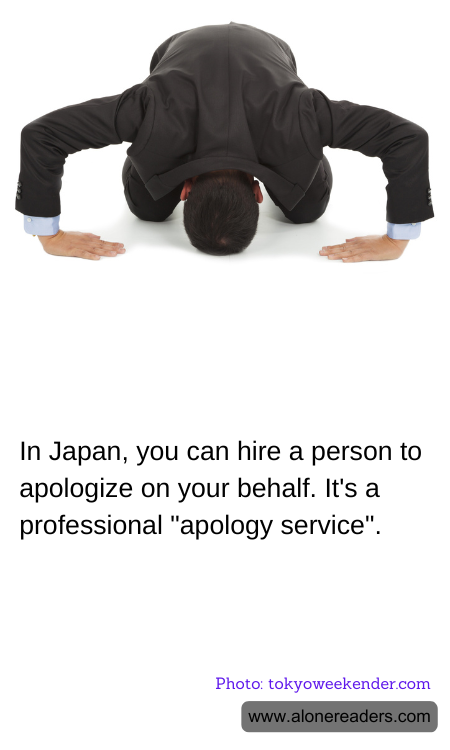
In Japan, a culture deeply rooted in social etiquettes and formalities, the act of apologizing holds significant weight. Given the complex nature of maintaining harmony and respect in personal and professional relationships, the unique service of hiring someone to apologize on one’s behalf has gained traction. This professional apology service caters to those who either find it too daunting or culturally significant to offer their apologies directly, thus they outsource this delicate task.
The professionals providing these services are often trained to handle various social situations requiring nuanced and heartfelt apologies. They understand the subtleties of the language and the appropriate demeanor needed to convey sincerity effectively. This is crucial in a society where a simple misstep in the process can result in further misunderstandings or conflicts. The services these professionals provide range from apologizing to friends or family to more formal settings such as business environments where mishaps might have caused significant issues.
Clients of these services include individuals who might have committed a faux pas or businesses that need to handle customer service blunders delicately and diplomatically. Typical scenarios requiring such services might involve misunderstandings, delays in service delivery, or in more personal cases, instances where direct confrontation is too awkward or emotionally challenging.
The process usually involves a detailed briefing where the hired apologist is informed of the situation and the background of the relationship. This briefing ensures that the apology is tailored to the recipient’s expectations and cultural norms. Pricing for these services varies depending on the complexity of the apology and the status of the people involved. In a business context, it is considered an investment towards reputation management and maintaining good public relations.
Cultural critics and sociologists see this service as a reflection of the high value placed on social harmony and proper conduct in Japanese society. While some may view the outsourcing of such a personal act as inherently impersonal or indicative of emotional detachment, many in Japan see it as a pragmatic solution to a delicate problem. Engaging an expert can often preserve relationships and prevent further damage in a way that might not be possible through direct, amateur attempts to apologize.
As culture evolves with modern challenges and globalization, this particular aspect of Japanese social management highlights both an adherence to traditional values and an adaptation to contemporary life’s pressures. Whether it will spread or influence other cultures with different values and social structures remains to be seen, but it certainly underscores the complex layers of human social interaction and the varying ways different societies address them.
