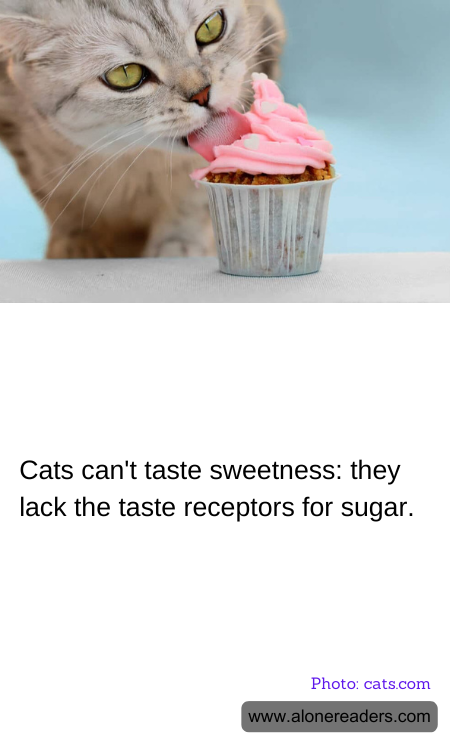
Cats, unlike humans and many other animals, do not have a sweet tooth. Scientifically speaking, cats are unable to taste sweetness due to the absence of a specific type of receptor on their tongues. Taste receptors are protein molecules that bind to specific substances and send signals to the brain, informing it about different flavors. In cats, the gene responsible for coding the sweetness receptor is not functional.
This phenomenon is quite rare among mammals but is seen in all felids, which includes not just domestic cats but also lions, tigers, and other big cats. The gene in question, known as Tas1r2, underwent a mutation at some point in the evolutionary history of cats, effectively disabling their ability to detect sugar molecules through taste. Researchers believe this mutation likely occurred because the diet of ancestral cats was highly carnivorous, relying primarily on protein from other animals. Over time, as the need to recognize plant-based sugars diminished, so too did the functionality of the Tas1r2 gene.
The implications of this genetic trait are practical as well as interesting. For one, it explains why cats typically show no preference for sweet foods, which can seem odd to us as humans. More importantly, from a dietary standpoint, it underpins the necessity of providing cats with a protein-rich diet, as their energy needs are fulfilled through the breakdown of proteins rather than carbohydrates. Commercial cat foods thus tend to have high protein content and minimal sugars.
Understanding that cats cannot taste sweetness also serves as a reminder to pet owners regarding the dietary needs and natural preferences of their feline friends. Unlike dogs, which can enjoy a range of flavors including sweet, cats are usually indifferent to sweets and are more drawn to savories. This lack of taste for sweetness also means that cats are less prone to consuming sugary foods, which is beneficial since high sugar intake can lead to health issues such as obesity and diabetes in pets.
Thus, while our feline companions may miss out on the joys of a sweet treat, their inability to taste sweetness reflects a fascinating aspect of their evolutionary adaptation and contributes to their unique dietary habits. Such insights not only deepen our understanding of the natural world but also help us to cater better to the health and well-being of our beloved pets.
