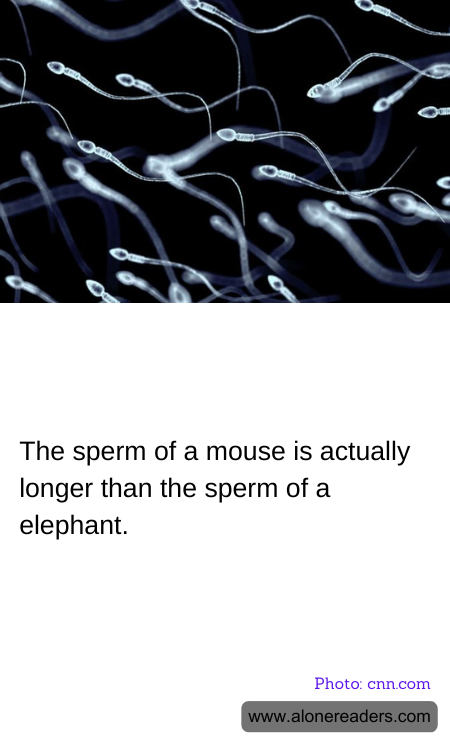
In the fascinating world of animal reproduction, the size of an organism does not always predict certain biological features like sperm size. Remarkably, the sperm of a mouse is indeed longer than that of an elephant, a fact that seems counterintuitive given the vast difference in the overall size of these two creatures.
The sperm of a mouse can measure up to 125 micrometers in length, with an exceptionally long tail making up the majority of its length. On the other hand, elephant sperm is typically only about 50 micrometers long. This difference is intriguing and highlights the varied evolutionary strategies different species have adopted to ensure reproductive success.
The size of sperm is influenced by many factors including the mode of fertilization and competition between sperm from different males of the same species. In species where females mate with multiple males, there can be a greater pressure on sperm size and mobility as they compete to fertilize the eggs. Mice, for instance, as small mammals with high reproductive rates, face intense sperm competition which leads to evolution favoring longer sperm. This enhances mobility, thereby improving chances of reaching and fertilizing an egg efficiently.
In contrast, elephants have a different reproductive strategy. They are typically less promiscuous, and male elephants often guard females they mate with from other males. This low level of sperm competition results in less evolutionary pressure on sperm length. Elephants’ large body size and life history traits such as a long gestation period and a low number of offspring also influence their reproductive strategies, probably swaying them away from needing longer sperm.
Thus, the example of sperm size in mice and elephants elegantly demonstrates that nature does not adhere to a one-size-fits-all approach, but rather tailors to the ecological niches and reproductive strategies of each species. This diversity in nature’s designs showcases the complex interplay of evolutionary forces shaping the life histories of organisms across the animal kingdom.
