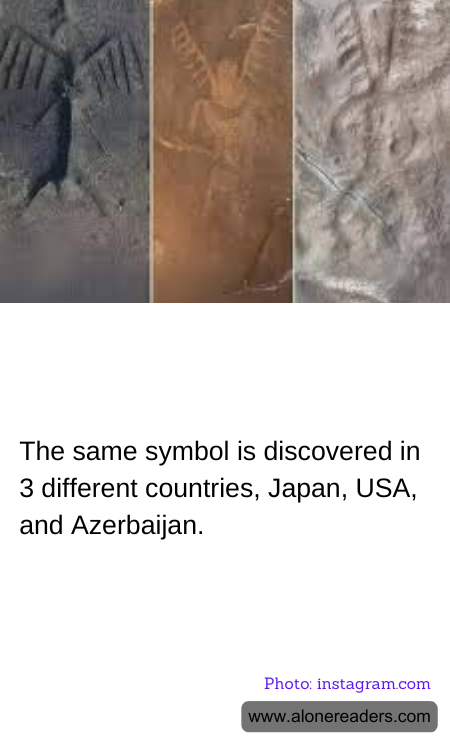
In an intriguing turn of events, archaeologists and researchers have stumbled upon a mystifying symbol that appears to transcend geographical and cultural boundaries. This identical symbol has been unearthed in three disparate locations: Japan, the United States, and Azerbaijan, sparking both excitement and bewilderment within the scientific and archaeological communities. Each finding was made independently, yet the striking similarities in the symbols' design have led to a flurry of collaboration among experts from these countries.
The symbol, consisting of a complex pattern that combines geometric and abstract elements, first came to light during excavations in a remote part of Japan. Shortly thereafter, an almost identical motif was discovered in an ancient cultural site in the American Southwest. The most recent discovery occurred in Azerbaijan, where excavators found the symbol etched into artifacts dated to be several centuries old. These discoveries raise fascinating questions about cultural exchange and migration patterns in ancient times.
The implications of these findings are profound, suggesting a possibly interconnected past that had previously gone undetected by historians and archaeologists. One theory posits that this symbol could have been a part of a global language or a universally recognized sign used by ancient travelers or traders. Alternatively, it might have represented a religious or spiritual belief shared among different ancient civilizations, perhaps linked to astronomical events or natural phenomena common to all human societies.
Researchers are now delving deeper into the contextual significances of the symbol in each location, trying to uncover any shared or divergent meanings. In Japan, the symbol was found near an ancient temple site, suggesting a spiritual or ceremonial use. In contrast, in the United States, the symbol appeared primarily on pottery and seems to have held a more utilitarian significance. The context in Azerbaijan remains the least understood but is believed to be connected to the region's rich tradition of folklore and storytelling.
The next steps involve extensive collaboration among international experts, including linguists, historians, cultural anthropologists, and digital archaeologists, who plan to use advanced technologies such as AI algorithms to compare these symbols with other known scripts and icons globally. Through such interdisciplinary efforts, they hope to piece together the puzzle of how these seemingly disconnected regions may have once been linked by this enigmatic symbol, opening a new chapter in our understanding of world history and ancient civilizations.
