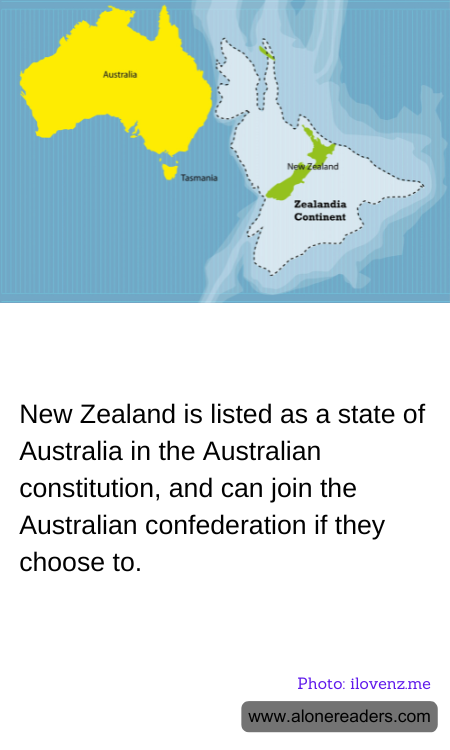
One of the lesser-known facts about the geopolitical relationships in the Oceania region is that New Zealand is mentioned in the Australian Constitution as a potential state of Australia. According to Section 6 of the Australian Constitution, which was enacted in 1901, New Zealand could join the Australian confederation as an additional state if it chose to do so. This inclusion highlights the close ties and shared colonial history between Australia and New Zealand, dating back to when both countries were part of the British Empire.
Despite this constitutional provision, New Zealand has remained a sovereign nation, choosing to forge its own path rather than join Australia. There are several reasons why New Zealand has not pursued membership in the Australian federation. One major factor is the strong sense of national identity that distinguishes New Zealanders, or Kiwis, from their Australian neighbors. Maintaining political and economic independence has been a priority for New Zealand, which has developed distinct domestic and foreign policies.
Additionally, there are practical concerns that contribute to New Zealand’s decision to remain separate. These include differences in economic structure, social policies, and political priorities. For example, New Zealand has a reputation for being more progressive on social issues such as environmental protection and social welfare than Australia. Joining Australia could potentially compromise these policies or dilute New Zealand’s ability to independently address such issues according to its own priorities.
The possibility for New Zealand to join Australia as a state remains, however unlikely it may seem in the current political climate. It serves as an interesting example of constitutional law intersecting with national sovereignty and identity. For now, both countries maintain a strong bilateral relationship, with extensive economic, cultural, and people-to-people links that underscore their shared history and mutual interests without necessitating political unification.
