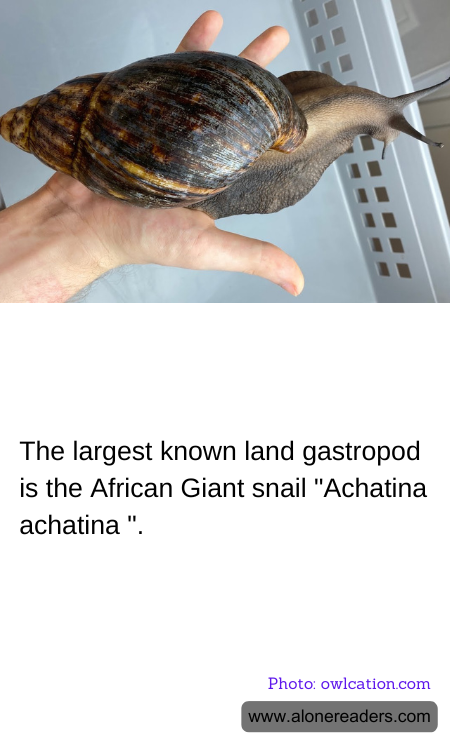
The African giant snail, scientifically known as Achatina achatina, holds the title for the largest land gastropod in the world. Native to the forests of West Africa, ranging from Sierra Leone to Nigeria, this remarkable species thrives in warm and humid environments. It is renowned not only for its size but also for its distinctive appearance and life habits.
Achatina achatina can grow to be as long as 30 centimeters and its shell can reach up to 25 centimeters in length, making it a giant among snails. The shell is mostly slender and conically shaped, featuring a high spire and a brownish color with lighter markings which serve as camouflage. These snails are nocturnal, primarily active during the night when the temperature is cooler and the humidity is higher, which helps in minimizing moisture loss.
Their diet is as varied as it is voracious, comprising mainly of fruits, leaves, and even flowers, which they consume with their tiny, rasping tongues known as radulae. This feeding habit makes them notorious among farmers, as they are capable of destroying a wide range of agricultural crops and ornamental plants.
Beyond their ecological role and agricultural impact, Achatina achatina is also of considerable interest to pet owners and collectors. However, their status as an exotic pet comes with significant consequences. In regions where they are not native, particularly in the United States and parts of Asia, Achatina achatina is considered an invasive species. Their rapid reproduction and lack of natural predators allow them to outcompete local snail populations, leading to imbalances in the ecosystem.
Efforts to control the population of Achatina achatina in non-native areas include strict regulatory measures on their importation and captivity. Despite these challenges, the African giant snail continues to fascinate scientists and enthusiasts alike. Its ability to adapt and thrive makes it a subject of study, particularly in the fields of biology and environmental science, where researchers aim to understand better the impacts of non-native species on local ecosystems.
In summary, the African giant snail Achatina achatina is an impressive species, notable not just for its size but also for its impact on both agriculture and ecosystems. Its presence in non-native regions poses challenges that require ongoing scientific attention and regulatory intervention to prevent ecological imbalances.
