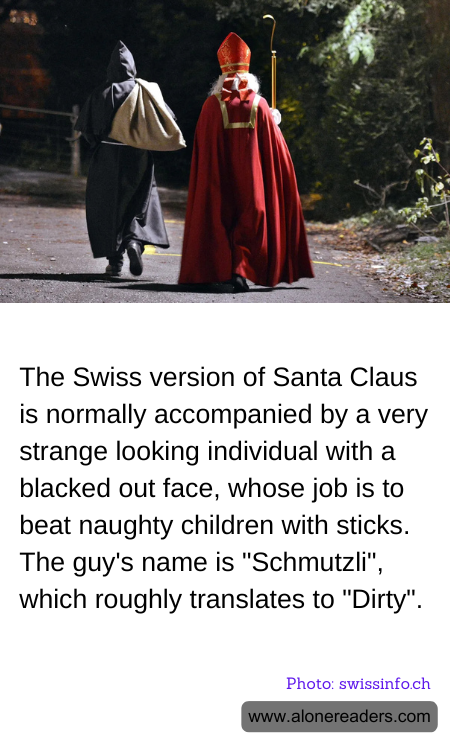
In Switzerland, the festive season is characterized by unique traditions that distinguish its Yuletide celebrations from those of other countries. Central to Swiss Christmas folklore is the figure of Samichlaus, similar to Santa Claus, who rewards well-behaved children with presents. However, unlike the solitary jovial figure of Santa known in other cultures, Samichlaus is often accompanied by a rather peculiar counterpart known as Schmutzli. The name "Schmutzli" translates to "Dirty" in English, a nod to his disheveled, soot-covered appearance which starkly contrasts with the cheerful red and white attire of Samichlaus.
Schmutzli's role in Swiss Christmas lore is both intriguing and controversial. Traditionally, his face is blackened, a detail that stems from the idea that he descends chimneys to deliver coal to naughty children. This aspect of his portrayal has led to ongoing debates about racial insensitivity and the need for modern reinterpretations of old traditions. Schmutzli carries with him a bundle of sticks, not merely as a rustic accessory but as a tool of admonishment for children who have not behaved throughout the year. According to folklore, while Samichlaus distributes gifts, Schmutzli rattles his sticks to scare the children, reminding them of the consequences of naughtiness.
The interplay between Samichlaus and Schmutzli is reflective of the classic good cop-bad cop routine, designed to teach children about reward and discipline. This helps impart moral lessons about good behavior and the repercussions of the opposite. However, modern celebrations have toned down the more fearsome aspects of Schmutzli's character in response to changing societal norms about child discipline and sensitivity towards using fear as a pedagogical tool.
Throughout Switzerland, various regions have their own interpretations and names for Schmutzli, such as Père Fouettard in the French-speaking parts and Schmutzli in the German-speaking regions. These characters join public celebrations and parades, which are anticipated events in the community where folklore vividly comes to life. Over time, the figure of Schmutzli, while retaining elements of his original form, has evolved, becoming less of a sinister character and more of a whimsical, though still potent, reminder of yesteryear’s discipline methods.
The characters of Samichlaus and Schmutzli highlight the rich cultural tapestry of Switzerland, showcasing how traditional narratives can adapt to align with contemporary values while still preserving the enchantment of folklore. Their story is a fascinating example of how culture-specific versions of widely recognized figures like Santa Claus can provide insight into the values, historical context, and social norms of a region.
