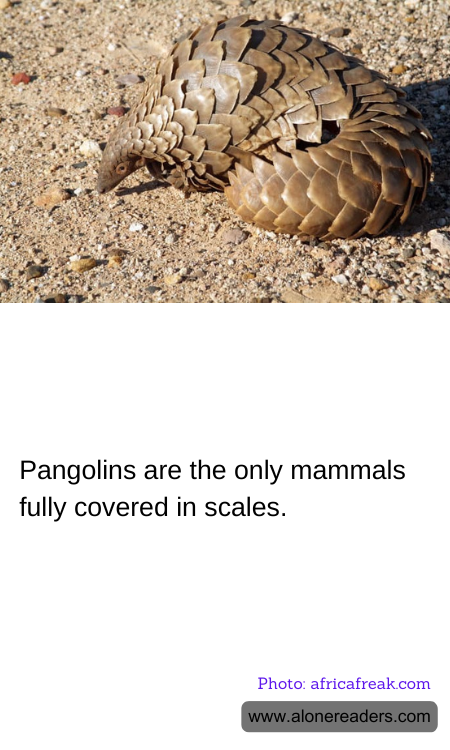
Pangolins, often referred to as scaly anteaters due to their unique physical characteristics, are the only mammals completely covered in scales. These scales, made from keratin — the same protein that forms human hair and nails — serve as an effective armor against natural predators. When threatened, a pangolin will curl into a tight ball, leaving only its hard, sharp scales exposed. This defense mechanism is so effective that it can deter even large predators such as lions.
Native to parts of Asia and sub-Saharan Africa, pangolins are solitary and primarily nocturnal animals, which makes them elusive and difficult to spot in the wild. They utilize their well-developed sense of smell to locate termites and ants, which comprise the majority of their diet. Their long, sticky tongues, which can be extended up to 40 centimeters, are perfectly adapted for extracting insects from deep burrows.
Despite their fascinating nature and ecological importance as pest controllers, pangolins face critical threats from wildlife trafficking and habitat loss. They are believed to be the most trafficked mammals in the world, largely because their scales are highly valued in traditional medicine and their meat is considered a delicacy in some cultures. This illegal trade, coupled with rapid habitat destruction, has led to a catastrophic decline in their numbers.
Conservation efforts for pangolins include anti-poaching measures, habitat restoration, and significant efforts to curb the demand for pangolin products. In recent years, international cooperation has increased, highlighted by the inclusion of all eight species of pangolins on the CITES (Convention on International Trade in Endangered Species of Wild Fauna and Flora) Appendix I, which bans international trade in specimens of these species except when the purpose of the import is not commercial, for instance for scientific research.
Understanding and overcoming the challenges faced by pangolins is crucial for their survival. Their unique presence in the biodiversity of our planet not only fascinates scientists and animal lovers but also plays a critical role in controlling insect populations, thus maintaining the balance of the ecosystems in which they live. Continued public awareness and strong international cooperation are vital for ensuring that future generations may also experience the wonder of these extraordinary mammals.
