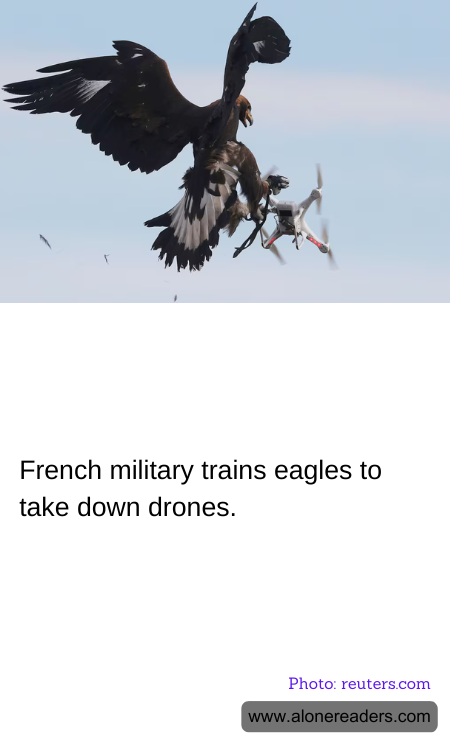
In a novel approach to tackling the increasing security threat posed by unauthorized drones, the French military has trained eagles to intercept and capture these flying devices. This initiative, amidst growing concerns over drone-induced espionage and potential terrorist attacks, leverages the natural predatory skills of these birds to combat technological breaches.
Eagles, known for their keen vision and powerful talons, are now part of an innovative defense strategy. This method of using trained birds of prey to capture or disable drones in flight was first adopted following successful implementations by police forces in the Netherlands. Recognizing the potential, the French Air Force initiated a program wherein they raised four eagles—named d'Artagnan, Athos, Porthos, and Aramis—from chicks beside drones, ensuring the birds imprinted on them as prey.
The training process involves using drones covered in leather to protect the eagles' talons, which are highly sensitive. Handlers reward the eagles with meat when they successfully intercept a drone during training missions. This encouragement not only aids in reinforcing the behavior but also ensures the eagles perceive drones as a source of food, thereby incentivizing them to hunt these aerial devices when spotted in open skies.
This eco-defense method is not only about utilizing the birds' natural behaviors but also ensuring their safety. The French military outfits each eagle with special Kevlar vests designed to protect them from any potential harm from drone blades or any explosive devices they might carry. The eagles are also regularly checked by veterinarians to ensure that their health is not compromised by their new role.
Despite the effectiveness and the biological elegance of the strategy, it's not without controversy. Animal rights organizations express concern over the potential risks such activities pose to the birds, ranging from injuries from the drones themselves to potential distress from their tasks. The French military, however, assures that substantial measures are in place to ensure the eagles' welfare, considering them as important members of the security team.
The French example has sparked interest in other countries, leading to discussions about the feasibility and ethical implications of using trained animals in modern military and security applications. While the debate continues, the sight of an eagle soaring to take down a drone remains a stark reminder of the intricate ways in which nature and technology can be intertwined to address complex security challenges. The ongoing development and refinement of this program reflect a unique convergence of ancient falconry practices with cutting-edge security needs, illustrating a forward-thinking approach to safeguarding national security.
