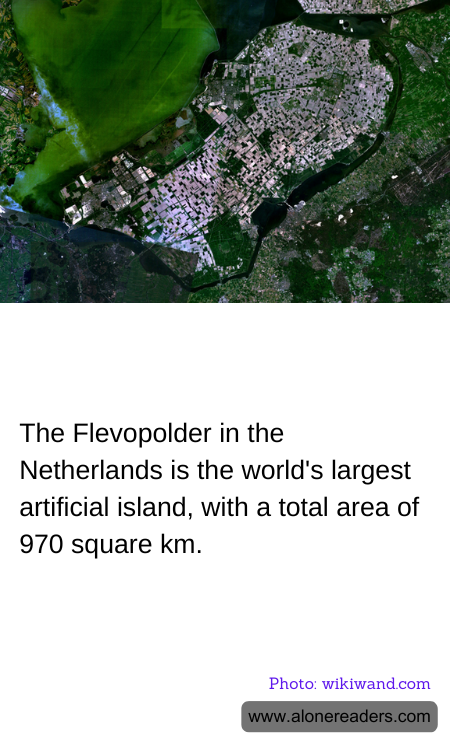
The Flevopolder, situated in the central region of the Netherlands, represents a remarkable feat of human ingenuity and engineering. This artificial island, formed by the reclamation of land from the IJsselmeer, a lake that used to be part of the Zuiderzee, a saltwater inlet of the North Sea, covers a total area of 970 square kilometers, making it the largest of its kind in the world. The creation of the Flevopolder is part of the larger Zuiderzee Works, a hydro-engineering project designed to protect the Netherlands from flooding and to increase its land area for agriculture, housing, and industry.
The reclamation process began with the construction of dykes and then proceeded by pumping out the enclosed water. This transformed what was once a part of the sea into fertile, usable land, fundamentally altering the landscape and providing new opportunities for development and settlement. The Flevopolder is not a continuous piece of land but consists of two parts: the Noordoostpolder and the Southern and Eastern Flevoland, which are separated by bodies of fresh water.
These polders have now been developed into thriving hubs of activity. They host cities like Lelystad and Almere, which are among the fastest growing in the Netherlands, providing residents with modern amenities and a high quality of life. In addition to residential and industrial developments, the Flevopolder is also known for its nature reserves and parks such as the Oostvaardersplassen. This particular reserve is famous for its large-scale rewilding project that has turned back the clock on a portion of the land to a time before human intervention, offering a unique view into Europe’s past natural landscapes.
The success of the Flevopolder has not only had a significant economic impact but also demonstrates the Netherlands' expertise in water management and environmental engineering. This project has been influential worldwide, serving as a model for similar land reclamation projects across the globe. Furthermore, it stands as a testament to the Dutch resolve to "create" space where none existed, directly challenging and overcoming the threats posed by nature through resilience and technological prowess. As the Earth faces more critical challenges such as rising sea levels, the experiences and technologies developed in the Flevopolder will undoubtedly provide valuable insights and solutions for future global environmental and infrastructural challenges.
