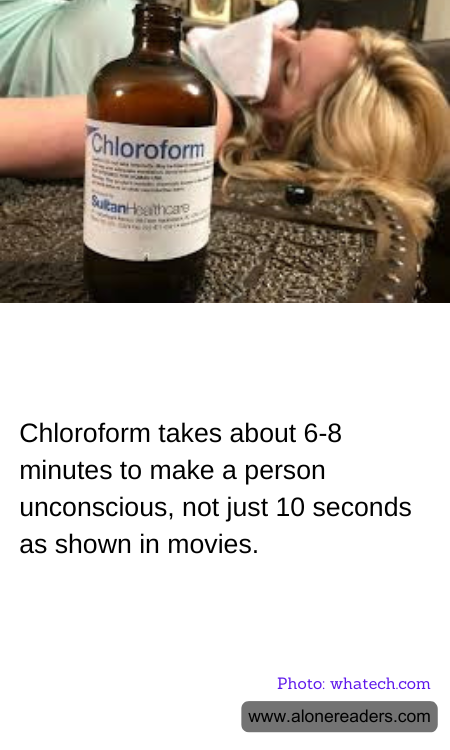
The portrayal of chloroform in popular media largely misrepresents its actual effects and the time it takes to render someone unconscious. Often depicted as a near-instantaneous method for incapacitating someone, in reality, chloroform is much less efficient. It takes about 6-8 minutes of inhaling an item soaked in chloroform to render a person unconscious, not merely the 10 seconds frequently shown in movies and TV shows.
Chloroform’s dramatic and misleading representation in media likely stems from its early medical use as an anesthetic during surgeries in the 19th and early 20th centuries, leading to a somewhat mystical or exaggerated understanding of its effects. Initially celebrated for its anesthetic properties, chloroform was later found to be quite dangerous. It has a narrow window of safety between an effective dose and a fatal dose, and prolonged exposure or a slightly higher concentration can lead to severe health issues or death.
The mechanism by which chloroform induces unconsciousness involves the disruption of cell membrane functions and interference with the central nervous system, which depresses the nervous system. The process of inhalation leading to unconsciousness is gradual because the solvent has to be absorbed from the lungs into the blood, then circulated and delivered in sufficient quantity to the brain.
Besides the physiological inaccuracies, the cinematic portrayal of chloroform also disregards its safety risks. Aside from its potential lethality, chloroform exposure can result in irritation of the respiratory system, skin, and eyes, as well as possible long-term effects such as liver and kidney damage, and even cancer.
Understanding the discrepancies between fictional representations and the real-life implications of using substances like chloroform is important not only for the sake of accuracy but also for public safety and awareness. Misconceptions propagated by movies could lead to dangerous imitation or misinformed handling of hazardous chemicals. Thus, it is crucial to address and correct exaggerated or false media portrayals and increase public education regarding the actual effects and risks of chemical substances like chloroform.
