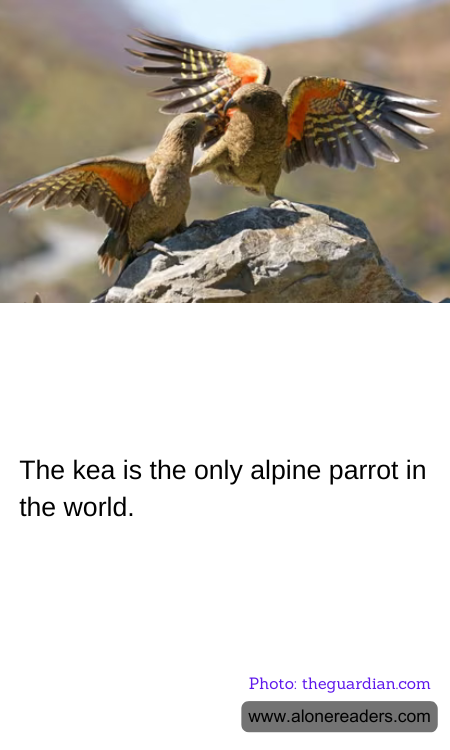
The kea, native to New Zealand, holds the unique distinction of being the only alpine parrot in the world. Montane and subalpine regions of the South Island offer these intelligent and curious birds a rugged habitat quite unlike those of their more tropical relatives. The kea is easily recognized by its strikingly colorful plumage, with shades of green and bursts of orange visible beneath its wings, and by its large, curved beak, perfectly adapted for a varied diet.
Renowned for its intelligence, the kea has been observed using tools and working cooperatively to achieve tasks, indicating a complex social structure and problem-solving capabilities. Its curiosity, often buttressed by a playful nature, sometimes leads it into conflict with humans—kea are known to explore and manipulate objects, including items belonging to tourists visiting their mountainous home ranges. This same curiosity, however, has endeared the kea to many. Conservationists and researchers are captivated by their behaviors, both in the wild and in controlled study settings, where kea have demonstrated the ability to solve logical puzzles.
Despite their allure and ingenuity, kea face threats from human activity. Their inquisitive nature often puts them at risk from human-made hazards, and changes to their natural habitat can have severe repercussions on their population, which is considered vulnerable. Conservation efforts are active, involving both protections against harm and education programs to raise awareness among the communities that share their environment. These efforts emphasize the kea's role in New Zealand's ecological structure and cultural heritage, promoting a coexistence that respects and preserves these remarkable birds.
Keas also contribute to their ecosystem by playing a role in seed dispersal and possibly even in controlling insect populations, though their occasional attacks on live sheep have historically made them unpopular among farmers. Today, strategies to manage kea-farmer interactions are part of broader initiatives to safeguard the future for these unique creatures.
In conclusion, the kea not only highlights the biodiversity of New Zealand but also illustrates the complex challenges of wildlife conservation. Adapting to both the frigid temperatures and the ecological peculiarities of the alpine environment, keas are a symbol of resilience and the interconnectedness of Earth's living systems. Their continued survival depends heavily on respectful and informed human interaction and intervention.
