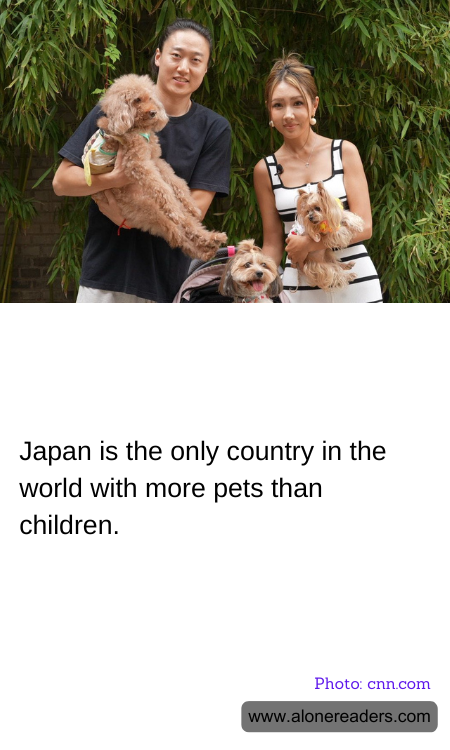
Japan's demographic landscape presents a unique scenario amongst industrialized nations. It has a distinctive trend where pets outnumber children, a reflection of broader societal and economic shifts. As of recent years, Japan's pet population, which primarily includes dogs and cats, has surpassed the number of children under the age of 15. This shift can be attributed to several factors, both cultural and systemic.
One significant reason is Japan's aging population coupled with a declining birthrate, a trend seen in many developed countries but particularly pronounced in Japan. The cost of living, the demands of work, and a shift in personal aspirations have led many young Japanese to postpone or even forsake having children. Raising a child in Japan can be financially burdensome, with education and housing costs being notably high. This has indirectly boosted the appeal of pet ownership, which offers a less financially demanding alternative to child-rearing, along with emotional or companionship benefits.
Social attitudes towards pet ownership have also evolved. Pets are increasingly seen as part of the family, with owners investing in high-quality pet care, gourmet food, and even fashion for their animals. The pet industry in Japan caters extensively to this anthropomorphic view of pets, thus encouraging further pet ownership. Pets often fill a void created by social isolation or the desire for a familial bond, which is a significant factor in a country noted for its overworked population and high rates of social withdrawal.
Moreover, the demographic shift has broader implications on the society and economy. For instance, the rise in pet ownership is reshaping market demands, with pet-related services and products becoming a booming industry. Conversely, industries related to children's products or services might be experiencing a downturn. This trend can also affect national policies, potentially influencing everything from housing regulations to healthcare services, prioritizing the needs of an aging population over those typically associated with young families.
In conclusion, while Japan's high pet population versus its child population highlights unique societal preferences and economic challenges, it also offers a glimpse into how demographic trends can reshape cultural norms and economic structures, creating both opportunities and challenges in an ever-evolving societal landscape.
