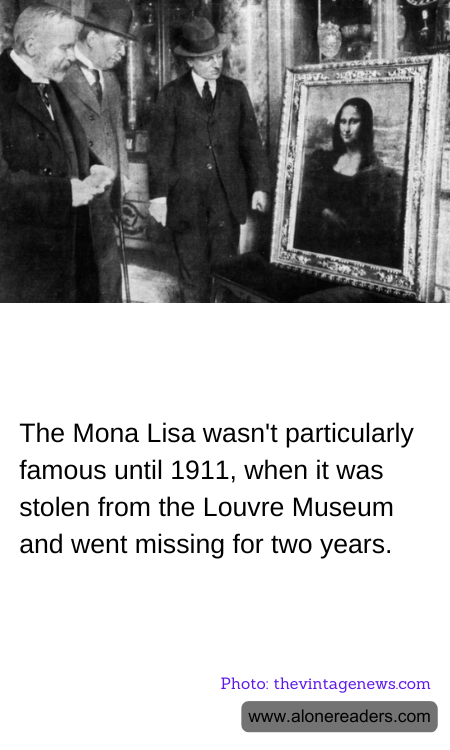
The Mona Lisa, now arguably the most famous painting in the world, owes a large part of its fame to an audacious theft in 1911. Before this event, Leonardo da Vinci's portrait was admired but did not yet enjoy the stellar status it holds today. On August 21, 1911, Vincenzo Peruggia, an Italian handyman who once worked at the Louvre Museum, accomplished what seemed unthinkable: he walked out of the museum with the Mona Lisa hidden under his clothes. This brazen act wasn't discovered until the following day, when the painting's absence triggered an uproar.
The theft was sensational news and suddenly, the Mona Lisa was on the front page of newspapers around the globe. The mystery surrounding its disappearance and the manhunt for the thief added to its allure and mystique. During its absence, the Louvre's visitors' numbers actually increased, as people flocked to see the empty space where the Mona Lisa once hung, demonstrating the newly sparked public interest in the artwork.
Peruggia's motive was reportedly a form of patriotism; he believed that the painting should be returned to Italy for display in an Italian museum, claiming it had been stolen by Napoleon during his rule. He kept the painting in a trunk in his apartment for two years before being caught trying to sell it to the Uffizi Gallery in Florence. Thankfully, his attempt to sell the painting was thwarted by museum staff who alerted the police.
The recovery of the painting was celebrated, and upon its return to the Louvre, its status was elevated to new heights. This incident catapulted the Mona Lisa into the realm of celebrity. The theft and the ensuing media frenzy turned the painting from a respected but relatively obscure piece of Renaissance art into a must-see icon for visitors from around the world. Today, it continues to draw millions of spectators, many intrigued not just by its artistic merit but also by the story of its infamous theft and remarkable recovery.
