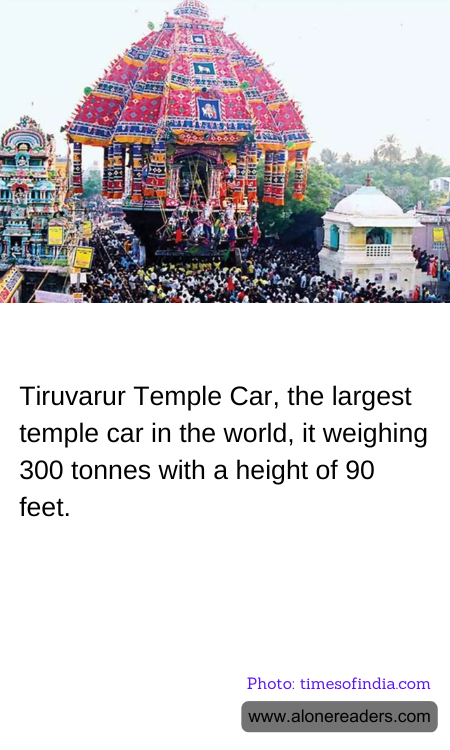
Tiruvarur Temple Car, often celebrated as a colossal marvel of religious architecture, stands as the largest temple chariot in the world. Situated in the town of Tiruvarur in Tamil Nadu, India, this temple car is a centerpiece of local culture and a beacon of spiritual significance for the devotees of Lord Shiva, to whom the temple is dedicated. Weighing an enormous 300 tonnes and reaching a soaring height of 90 feet, this chariot epitomizes both the artistic and engineering prowess of its creators.
The temple car is primarily used during the annual chariot festival, known locally as the "Ther Thiruvizha". This festival is highly revered and draws thousands of pilgrims and tourists from across the country and globe. During the event, the gigantic chariot, adorned with intricate carvings and elaborate decorations, is pulled through the streets by scores of devotees. This act is not only a spectacle of immense faith and devotion but also a testament to the communal spirit and teamwork as people from various walks of life come together to participate in this holy journey.
Crafted with traditional techniques that have been passed down through generations, the Tiruvarur Temple Car is made from a robust framework of wood, overlaid with stunning metalwork that depicts various deities and mythological scenes from Hindu scriptures. Despite its massive structure, the chariot's design allows it to be maneuverable, albeit with great human effort and coordination.
The Tiruvarur Temple Car's significance extends beyond its physical attributes, symbolizing the divine presence and cultural heritage of the region. It serves as a poignant reminder of the spiritual devotion and artistic heritage that has thrived in Tamil Nadu for centuries. Additionally, the car festival promotes social cohesion and provides an economic boost to the local community, as countless vendors and artisans come forth to sell their goods and crafts during the festive period.
In recognition of its unique cultural and architectural significance, there have been calls to preserve this magnificent chariot and possibly recognize it as a UNESCO World Heritage site. Such status would help ensure that the necessary measures are taken to maintain and protect this ancient artifact for future generations, while also acknowledging its profound impact on the cultural landscape of India.
