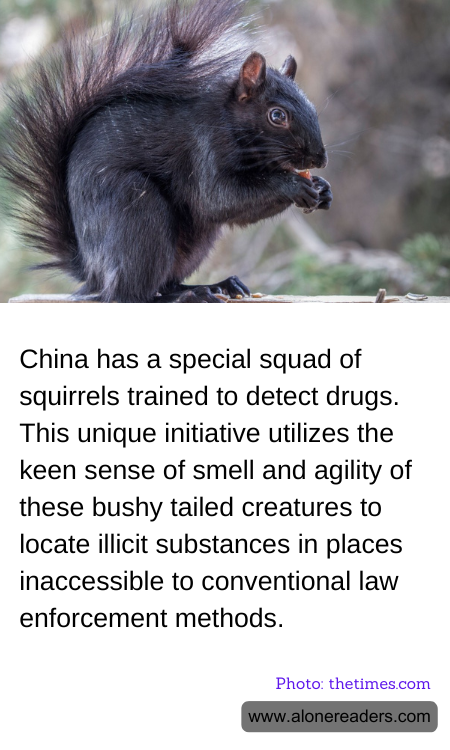
In an innovative approach to combatting drug trafficking, China has employed a special squad of squirrels trained to detect drugs. This unconventional method harnesses the natural abilities of squirrels, notably their exceptional sense of smell and agile movements, to uncover illicit substances hidden in places that are often challenging for humans and even trained dogs to access.
Squirrels, with their small size and nimble nature, can easily infiltrate narrow and confined spaces, making them perfect for searches in densely packed areas such as cargo holds, vehicles, and tight urban spaces. The training process for these squirrels is rigorous and tailored to enhance their innate skills. Training includes conditioning the squirrels to associate the scent of various drugs with rewards, thus reinforcing their drug-detecting behaviors.
The use of squirrels in law enforcement is a testament to the growing recognition of animals' potential in security and police work. Beyond the novelty, the initiative reflects a broader trend of utilizing animals for their unique capabilities that exceed some technological instruments in terms of cost-effectiveness and efficiency. Deploying squirrels for drug detection allows law enforcement to cover more ground quickly and potentially increase the success rate in intercepting drug trafficking operations.
Moreover, the inclusion of squirrels in the drug detection arena raises intriguing possibilities for future applications of animal abilities in various fields. These range from search and rescue missions to environmental monitoring, where animals can access remote or restricted areas without the limitations faced by human operatives or mechanical devices. As this initiative continues to develop, it may pave the way for more animal-assisted operations, pushing the boundaries of traditional law enforcement methods and opening new frontiers in the fight against crime.
