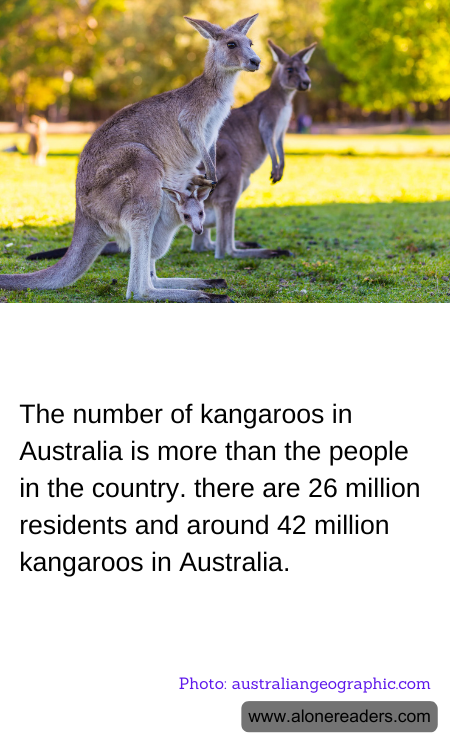
Australia is renowned for its unique and diverse wildlife, and kangaroos are perhaps the most iconic of all its native species. Surprisingly, the kangaroo population in Australia is significantly higher than that of the human population. While Australia is home to about 26 million people, the kangaroo population is estimated to be around 42 million. This staggering number underscores not only the kangaroo's prolific nature but also the vast and varied habitats available across the continent that support their breeding and survival.
Kangaroos, which belong to the family Macropodidae, are predominantly found in the wild and are well-adapted to the Australian landscape. Their ability to survive in a wide range of climates and ecosystems, from grasslands and forests to arid desert areas, explains their high numbers. Moreover, the absence of natural predators and the adaptation of their reproductive system allow kangaroos to regulate their population effectively. Female kangaroos have the remarkable ability to pause the development of an embryo until environmental conditions are favorable, a phenomenon known as embryonic diapause.
The vast number of kangaroos also poses challenges, including conflicts with human interests such as agriculture and vehicular traffic. Farmers often consider kangaroos a nuisance because they compete with livestock for food and water, especially in times of drought. Meanwhile, kangaroo-vehicle collisions are a common hazard in rural and suburban areas, often resulting in significant damage and occasionally, fatalities.
Managing the kangaroo population has become a critical task for Australian wildlife authorities. Strategies include regulated culling and the promotion of commercial use of kangaroo products, such as meat and leather, which is seen as a way to maintain sustainable numbers while leveraging economic benefits. However, these methods are subject to ongoing ethical, environmental, and practical debates.
Australia’s kangaroo dilemma highlights the broader challenges of wildlife management and conservation in areas where human and animal populations overlap. Balancing ecological health, animal welfare, and human interests requires nuanced and adaptable strategies. While kangaroos are a national symbol of Australia’s natural heritage and a major draw for tourism, their management remains a complex and evolving issue reflecting the broader tensions between nature and human expansion.
