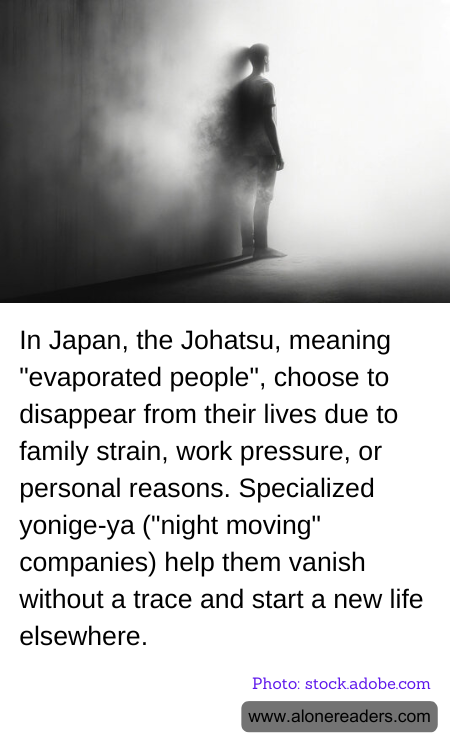
In Japan, a unique and secretive phenomenon known as "Johatsu" or "evaporated people" refers to individuals who decisively vanish from their existing lives. This drastic step is often taken in response to overwhelming family strain, unbearable work pressure, insurmountable debts, or other deep personal crises. The cultural backdrop of Japan, which places high value on honor, social conformity, and the group over the individual, intensifies the fear of shame and failure, leading some to see disappearance as their only escape from a situation that seems hopeless.
Adding to the complexity of this phenomenon are companies known as yonige-ya, translating roughly to "night moving" services. These businesses specialize in aiding those who decide to disappear, offering a swift and secretive relocation service. Operating under the cover of darkness, these companies help individuals move to new locations, often far from their previous homes, where they can assume new identities and start afresh. The services provided may include assistance in finding new accommodations, new job placements, and sometimes even new identities. The discreet nature of these operations is paramount, ensuring that the client's previous life can be left entirely behind, often without leaving any trace for families or authorities.
The existence of Johatsu challenges the perception of a society known for its low crime rates and strong social structures. The act of vanishing is seen by some as a way to regain control over their lives, a desperate bid for autonomy in a society where failure often feels like a communal rather than a personal burden. However, this decision carries profound implications. Families are left without closure, grappling with the mystery of a loved one who disappeared without explanation. It raises questions about mental health support and societal pressures in Japan, highlighting the extreme lengths to which individuals will go to avoid disgrace or confront personal demons.
As urban legends and stories about the Johatsu circulate, they shed light on the dark corners of Japanese society and the hidden struggles of its people. While the notion of evaporating might seem like an escape, it underscores the harsh realities faced by those who feel this is their only option, and the continuing necessity to address the underlying issues leading to such drastic measures.
