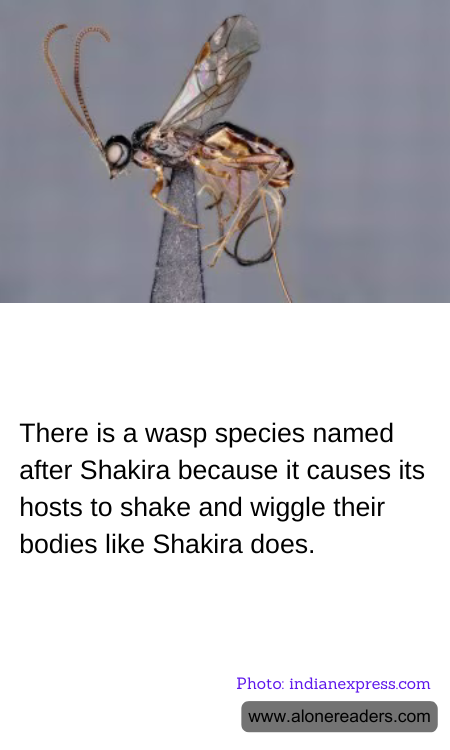
In the fascinating world of taxonomy, where species often receive names based on notable characteristics or as tributes to famous personalities, a particular wasp species stands out for its unique connection to pop culture. Named Aleiodes shakirae, this wasp species intriguingly draws a parallel to the Colombian pop singer Shakira, known for her iconic hip-shaking dance moves. The connection, however, extends beyond a mere namesake.
Aleiodes shakirae belongs to the family Braconidae, a group of wasps known for their role as parasitoids, which means they lay their eggs on or in other insects. Once the eggs hatch, the larvae feed on the host, eventually leading to the host's demise. What makes Aleiodes shakirae particularly noteworthy is its effect on the caterpillar hosts. The larvae of this wasp manipulate the caterpillar's behavior, causing it to convulse or shake in a manner reminiscent of Shakira's famous dance moves. This peculiar behavior likely aids in the completion of the wasp's life cycle, ensuring the larvae can continue developing within a destabilized host.
The naming of this wasp species is a testament to the creativity and sometimes whimsy of scientists. It not only sheds light on the complex and often brutal relationships within ecosystems but also provides a memorable way to engage the public's interest in entomology and parasitology. The interaction between Aleiodes shakirae and its host underscores the fascinating and sometimes macabre strategies evolved by parasitic species to ensure their survival and propagation.
Beyond its amusing nomenclature, the study of Aleiodes shakirae offers deeper insights into the ecological roles of parasitoids and their potential applications. Understanding these relationships can help in biological control efforts, where natural predators or parasites are used to manage pest populations in agriculture, thus reducing the reliance on chemical pesticides. In this light, even the most whimsically named species can have profound implications for ecological research and practical applications in environmental management.
