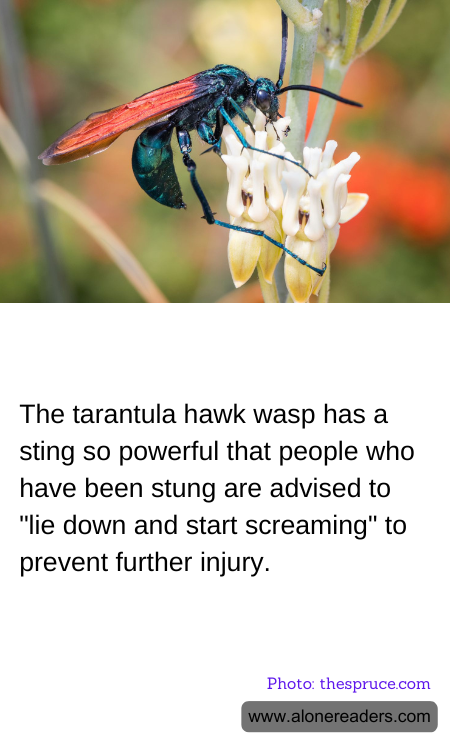
The tarantula hawk wasp, a member of the spider wasp family Pompilidae, is renowned not just for its striking appearance but also for possessing one of the most potent stings in the insect world. These wasps are large, with metallic blue bodies and bright orange wings, making them hard to miss in their natural habitats. As their name suggests, tarantula hawks prey on tarantulas, not for food, but as a host for their larvae. The female wasp will paralyze a tarantula with her sting and lay an egg on its abdomen. Once the egg hatches, the larva will feed on the still-living spider, consuming it entirely before pupating.
The sting of the tarantula hawk is among the most painful of any insect, rated as a level 4 on the Schmidt Pain Index, which is the highest category in the index. The pain is so immediate and intense that it can incapacitate a person momentarily. It has been described subjectively as a 'blinding, fierce, shockingly electric pain.' This excruciating experience is primarily a defense mechanism; the wasp's sting is not intended for predatory purposes but to protect itself from potential threats.
Due to the severity of the pain, which can overwhelm normal cognitive functions, victims are advised to lie down immediately if stung. This advice is practical, aiming to prevent injury from falling or losing control due to the pain. "Lie down and start screaming" is anecdotal advice that underscores the intensity of the pain while also conveying that one might be incapable of controlled actions or decisions after being stung.
Interestingly, despite its formidable defense mechanism, the tarantula hawk wasp is generally docile towards humans and only stings when provoked. Observers can safely watch these creatures from a safe distance, admiring their unique behavior and striking appearance. Nevertheless, knowing the potential risks, it is advisable to maintain respect and caution around them to avoid any accidental provocation. Among entomologists and insect enthusiasts, the tarantula hawk wasp is both respected for its impressive natural history and feared for its powerful sting.
