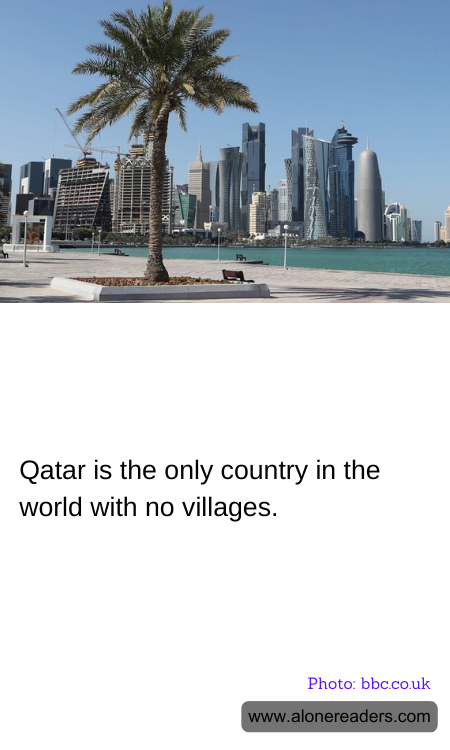
Qatar, a small country located in the Middle East on the northeastern coast of the Arabian Peninsula, is unique in many aspects, but the notion that it is the only country in the world without villages is not entirely accurate. Qatar is primarily known for its urban wealth, particularly in its capital city, Doha, which is a major financial and cultural hub. Doha's modern skyscrapers, bustling business districts, and cultural facilities overshadow the country's lesser-known regions. However, outside Doha, Qatar exhibits a number of smaller communities and settlements that might not traditionally be referred to as "villages," yet fulfill similar roles.
Although Qatar has urbanized rapidly, especially in preparation for events like the 2022 FIFA World Cup, it does have settlements outside the main urban centers. Areas such as Al Khor, Al Wakrah, and Madinat ash Shamal, for instance, might not resemble typical villages found in other parts of the world due to their relatively high infrastructure development. However, they started as small settlements or villages and have grown as part of Qatar's overall expansion.
Qatar's geographical and demographic landscapes are indeed more urban-focused compared to many other nations, with a high percentage of its population living in urban areas, particularly in and around Doha. This urban concentration is largely due to the economic activities centered around oil and gas industries and related services, which attract a large number of both domestic and foreign workers to the city areas.
This transition towards urbanization does not completely eliminate the existence of smaller towns or communities. It’s important to note that the definition of "village" can vary globally. In many countries, a village might be defined by certain population thresholds or lack of municipal governance, whereas, in Qatar, smaller communities might not fit the quintessential image of a village but serve similar communal functions. These places show the blend of the traditional and modern facets of Qatari culture, representing the less visible but still vital parts of the country's demographic makeup.
Thus, while it's true that Qatar's landscape is predominantly urban and lacks the kind of rural villages seen in more diversely populated countries, it is not accurate to say it is the only country without villages. The narrative depends significantly on the definitions and traditional understandings of what constitutes a village.
