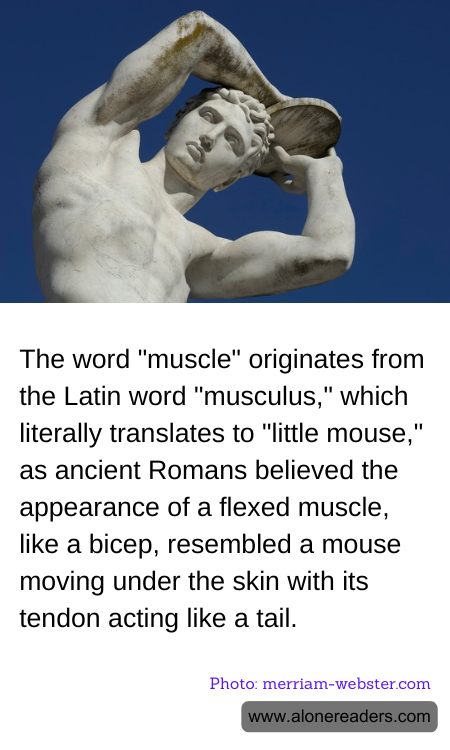
The etymology of the word "muscle" is as intriguing as the function it describes. Derived from the Latin term "musculus," this word literally means "little mouse." This peculiar comparison originated from ancient Roman observations, where the motion and shape of a flexed muscle, such as the bicep, was thought to mimic a small mouse moving under the skin. The muscle's tendons were likened to the mouse’s tail, completing this visual analogy. This metaphorical representation highlights not only the Romans' keen observational skills but also their creative linguistic approach to the natural world around them.
Muscles are fundamental components of the human body, essential for movement, stability, and strength. They operate under the control of the nervous system, flexing and relaxing to facilitate movement across the body’s joints. The human body contains approximately 700 muscles that contribute to both voluntary movements, like walking and talking, and involuntary ones, such as the beating of the heart and peristalsis in the gastrointestinal tract. Muscles also play a crucial role in maintaining posture and generating heat during cold conditions.
The cultural aspect of comparing body parts to familiar animals or items is not unique to the Romans; it reflects a broader human tendency to relate unknown phenomena to familiar concepts. This practice not only served as a mnemonic aid but also enriched the language, providing vivid imagery to describe bodily functions and features. Such linguistic creativity continues to influence the way modern anatomy is taught and understood, bridging historical perspectives with contemporary scientific knowledge.
