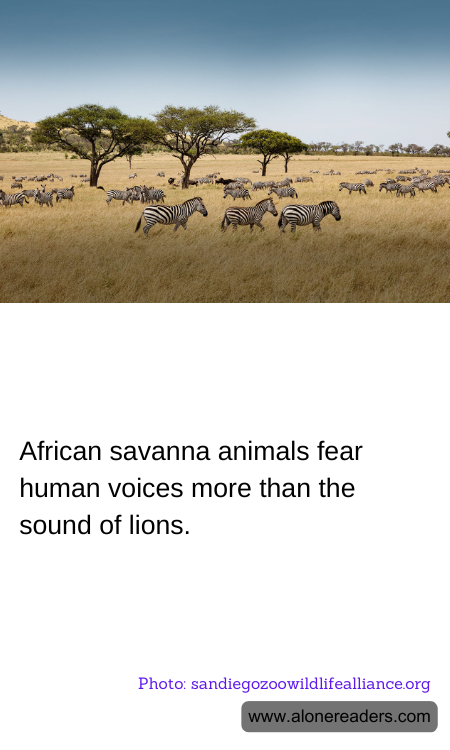
Animals in the African savanna exhibit a heightened sense of fear when exposed to human voices, more so than when hearing the roars of lions, their natural predators. This intriguing behavioral response underscores the profound impact humans have on wildlife, often surpassing that of other predators within the ecosystem. Researchers conducting studies in these environments utilize playback experiments where they broadcast different sounds in natural settings and observe the reactions of various savanna species such as elephants, zebras, and antelopes.
The reaction to human voices can be attributed to the negative associations these animals have developed with human activities such as hunting and habitat encroachment. Over generations, many species have come to associate human sounds with imminent danger, leading to an evolution of instinctual behaviors that prioritize caution and avoidance when humans are perceived to be nearby. In contrast, while lions are apex predators within the African savanna, the predictability of their behavior and the established natural avoidance strategies employed by prey may result in a less pronounced reaction when their roars are heard.
The implications of this fear are multifaceted. On one hand, it highlights the adaptive nature of wildlife, capable of discerning between different threats and modifying behavior accordingly. On the other hand, it emphasizes the pervasive influence of human presence on animal behavior and stress levels, which can have cascading effects on the wellbeing of individual animals and the overall health of the ecosystem. Stress can lead to decreased reproductive rates and altered feeding behaviors, which in turn affect population dynamics and ecological balance.
Conservation efforts must take into account the significant psychological and physiological impacts that human activities have on wildlife. Creating buffer zones, minimizing human-wildlife conflicts, and implementing strategies that reduce negative human interactions can be effective in mitigating these impacts. Additionally, educating local communities and tourists about the consequences of their presence and promoting respectful wildlife observation practices are vital in preserving the natural behaviors and habitats of savanna species.
This phenomenon opens up further questions about the long-term effects of human domination in wild spaces and how it alters the natural order. Understanding and mitigating our impact on these ecosystems is crucial for ensuring their survival and functionality in an increasingly human-dominated world.
