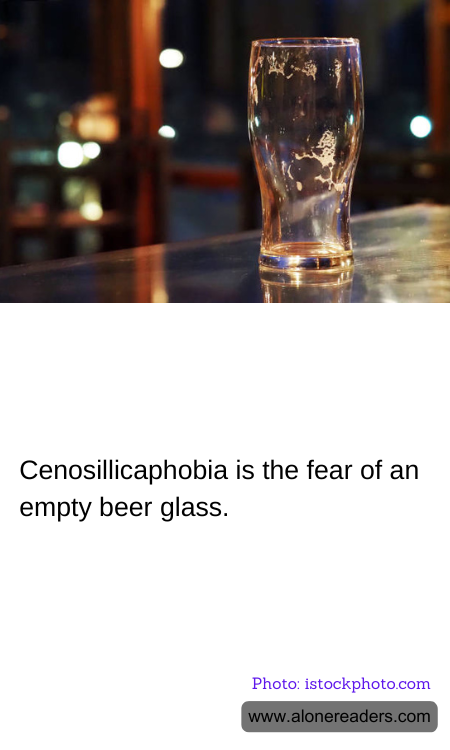
Cenosillicaphobia is a tongue-in-cheek term used to describe the fear of an empty beer glass. Although it's not recognized as an official phobia by the medical or psychological community, it highlights a humorous way that beer enthusiasts express their fondness for a filled pint. The word itself is purportedly derived from a combination of pseudo-Latin and Greek, with "keno" suggesting emptiness, "sillica" relating to glass, and "phobia" meaning fear.
This phobia is more about cultural camaraderie and the social enjoyment associated with drinking beer rather than a serious anxiety disorder. It often serves as a playful expression among friends in bars and pubs, particularly emphasizing the sadness or disappointment when one finds their glass empty. Discussions or jokes about cenosillicaphobia can be common in settings where beer is enjoyed and celebrated, reinforcing the communal and festive traditions associated with beer drinking.
Beer itself has a rich history that spans thousands of years and various cultures, making it more than just a beverage but a significant social element in many societies. The making and consuming of beer are often associated with social customs and practices, where sharing a drink can symbolize friendship, celebration, or a rite of passage. In this context, cenosillicaphobia can be seen as a light-hearted acknowledgment of beer's central role in these social interactions.
While cenosillicaphobia is certainly made in jest, it does subtly touch on the human desire for connection and enjoyment. The fear of an empty beer glass isn't just about the absence of beer but perhaps more deeply about the fear of social disconnection or the end of a joyful moment shared with others. This phobia, as whimsical as it is, underscores the idea that happiness is often found in moments of togetherness and leisure, with a beer glass serving as a symbol of shared experiences.
