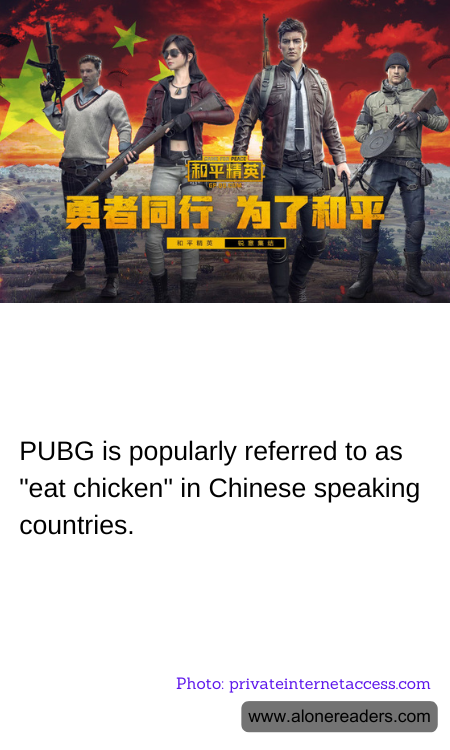
The wildly popular game PUBG, or PlayerUnknown's Battlegrounds, has not only been a global phenomenon but has also picked up unique cultural nuances as it has spread around the world. In Chinese-speaking countries, the term "??" (chi ji), which translates to "eat chicken," is widely used to refer to playing PUBG. This phrase derives from the game’s victory message: "Winner Winner Chicken Dinner!" which appears on the screen when a player or team wins the game. This expression has its origins in old Las Vegas casinos where a typical chicken dinner was the same price as a standard bet, so if you won, you could afford a chicken dinner.
The colloquial term exemplifies how regional gaming communities can reshape game culture in a way that resonates locally. In China, where gaming is a major part of social interaction and entertainment, "eating chicken" has become more than just a slang term for winning; it's part of the gaming lexicon, a goal every player strives for. This local adaptation of the game’s jargon highlights the significance of context and the way language evolves to include community-specific references and humor.
Moreover, this adaptation reflects a broader trend in the digital gaming industry where local cultures assimilate and reinterpret gaming elements, creating a shared yet unique gaming experience that resonates differently across various regions. This phenomenon ensures that while gamers around the world are playing the same titles, their experiences can be quite diverse based on cultural, linguistic, and regional specifics. Such variations enrich the global gaming culture, offering insights into how digital entertainment can be a mirror and a maker of cultural idiosyncrasies. This specific case of PUBG and its Chinese nickname is a perfect illustration of how video games are not just global products but also local phenomena that adapt and thrive on regional interaction.
