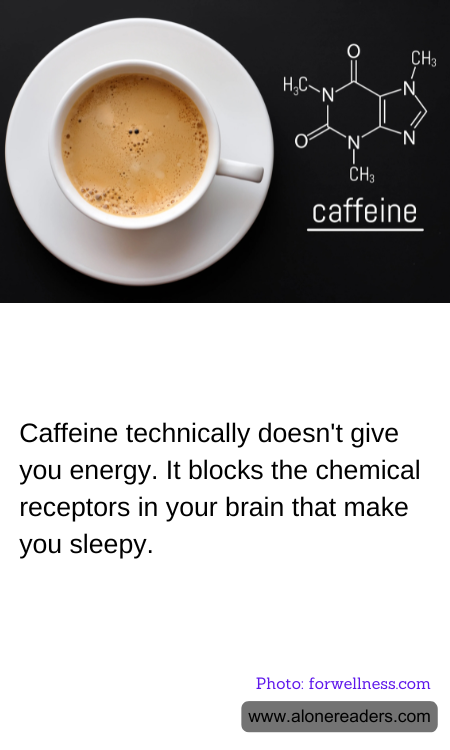
Caffeine, one of the most widely consumed stimulants in the world, is often credited with providing an energy boost. However, the real mechanics of how caffeine affects the body show that it doesn't actually supply any energy in the biochemical sense, as nutrients like carbohydrates, fats, or proteins do. Instead, caffeine's primary effect is on the central nervous system as a stimulant, and it functions by blocking the action of specific neurotransmitters that promote sleepiness.
The main target of caffeine in the brain is adenosine, a neurotransmitter that promotes relaxation and sleepiness. Under normal circumstances, adenosine levels build up in the brain over the day, leading to increasing tiredness and eventually promoting sleep. Caffeine, structurally similar to adenosine, binds to the adenosine receptors in the brain. However, unlike adenosine, it does not activate these receptors. By occupying these sites, caffeine effectively blocks the action of adenosine, thus reducing feelings of tiredness.
This blocking effect leads to increased neuronal activity in the brain. In response, the pituitary gland perceives this activity as an emergency and releases hormones that tell the adrenal glands to produce adrenaline (epinephrine), another stimulant. This not only keeps you awake but also makes you feel more alert and can temporarily improve focus and mood.
The indirect stimulation of adrenaline release also affects the body in several other ways, such as increasing heart rate, blood flow to muscles, release of sugar in the blood for extra energy, and opening of airways. Despite these changes, it's crucial to note that the actual energy comes from the body's stored resources and not directly from caffeine, which merely triggers the body to ready itself for action.
Due to its mechanism of action, caffeine doesn't replenish energy in the form of calories, and its effects are temporary. As the caffeine starts to wear off, adenosine receptors gradually begin to function normally again, often leading to energy crashes or feelings of fatigue once the adrenaline effect subsides. Therefore, while caffeine can help to ward off sleepiness and make you feel more energetic, it is essentially borrowing from the body's stores of energy rather than providing new energy. This is why many people experience a cyclical effect of ups and downs in energy throughout the day when regularly consuming caffeinated beverages.
