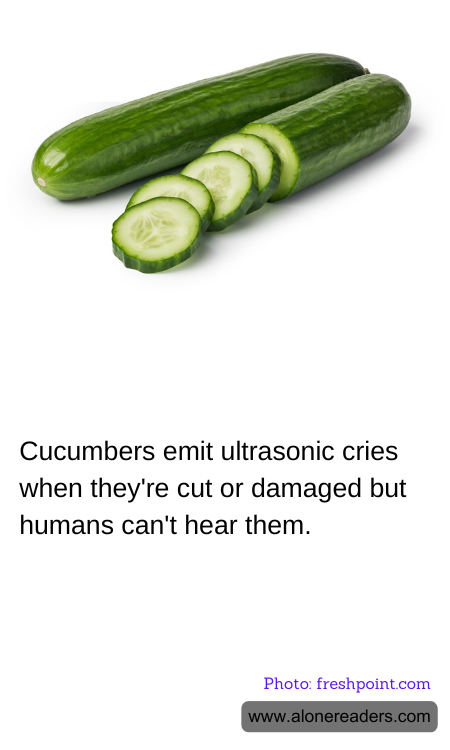
Cucumbers, much like many other plants, have a unique response to stress or injury that most people are unaware of. Recent studies have shown that when cucumbers are cut or damaged, they can emit ultrasonic sounds, sometimes referred to as “cries,” which fall outside the range of human hearing. Humans are generally only able to detect sounds between 20 Hz and 20,000 Hz, whereas the frequencies of these ultrasonic sounds emitted by cucumbers can exceed 20 kHz, making them inaudible to us.
The discovery of these ultrasonic emissions in plants like cucumbers stemmed from research into plant bioacoustics, a field that examines sound production and perception in plants. Researchers have suggested that these sounds could be a form of distress signal to other plants, a cry for help, or a mechanism to startle herbivores. Although plants do not have nervous systems or brains, these sounds may be a biochemical response to physical damage that could trigger defensive reactions, such as the release of bitter or toxic chemicals to deter predators and prevent further damage.
This phenomenon contributes to the growing evidence that plants possess sophisticated ways to communicate and interact with their environment. The emissions of ultrasonic sounds may serve to alert nearby plants about potential dangers, allowing them to preemptively activate their own defense mechanisms in anticipation of similar threats. This area of research highlights the complexity of plant behaviors and the intricate ways in which they may interact and perceive their surroundings, challenging traditional views of plant life.
Understanding these emissions isn't just a curiosity—it can also have practical applications. Farmers and gardeners could potentially use this knowledge to monitor crop health and detect plant distress signals early, managing their crops more effectively and reducing damage from pests or diseases. As research continues, the mysterious world of plant communication and perception is sure to offer even more insights into these fascinating organisms, potentially revolutionizing the way we think about, grow, and interact with plants.
